
Last updated November 15, 2026
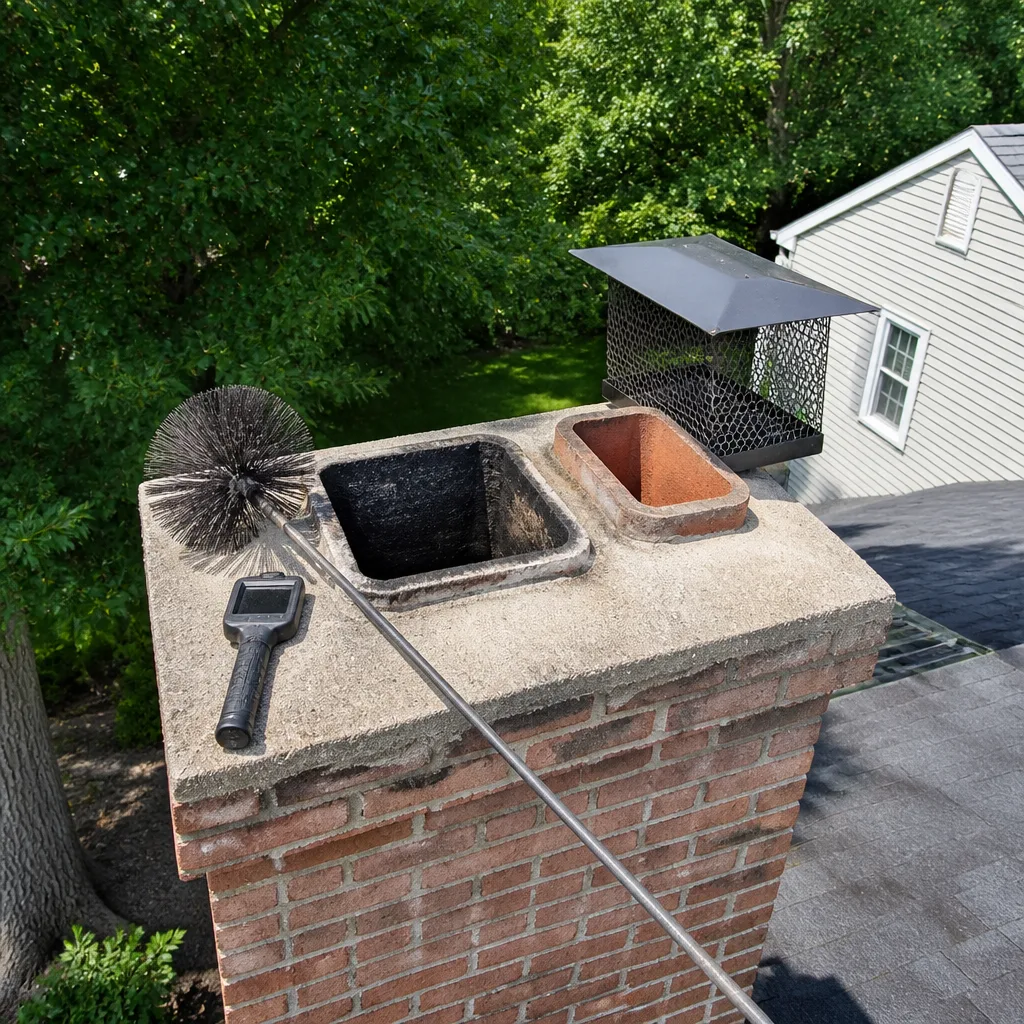 Sweep & inspection
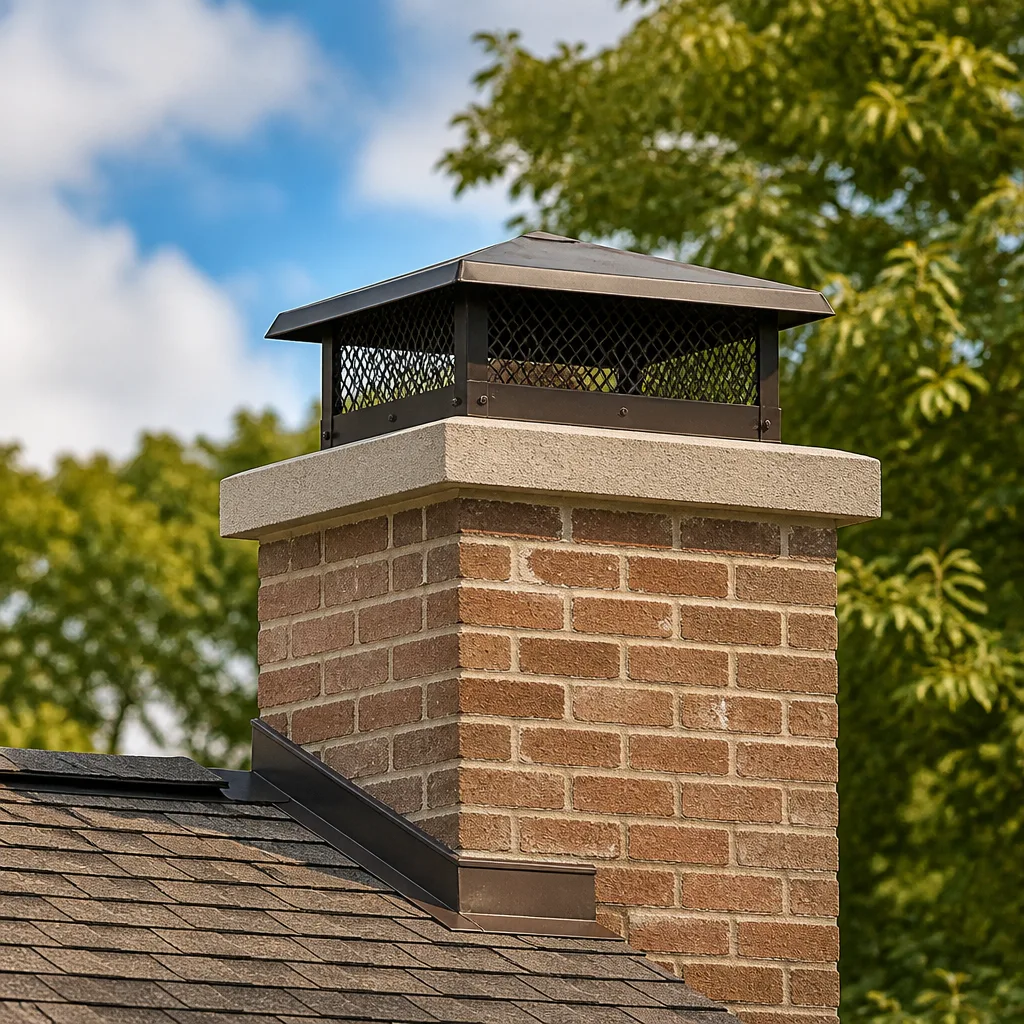 Caps & crowns
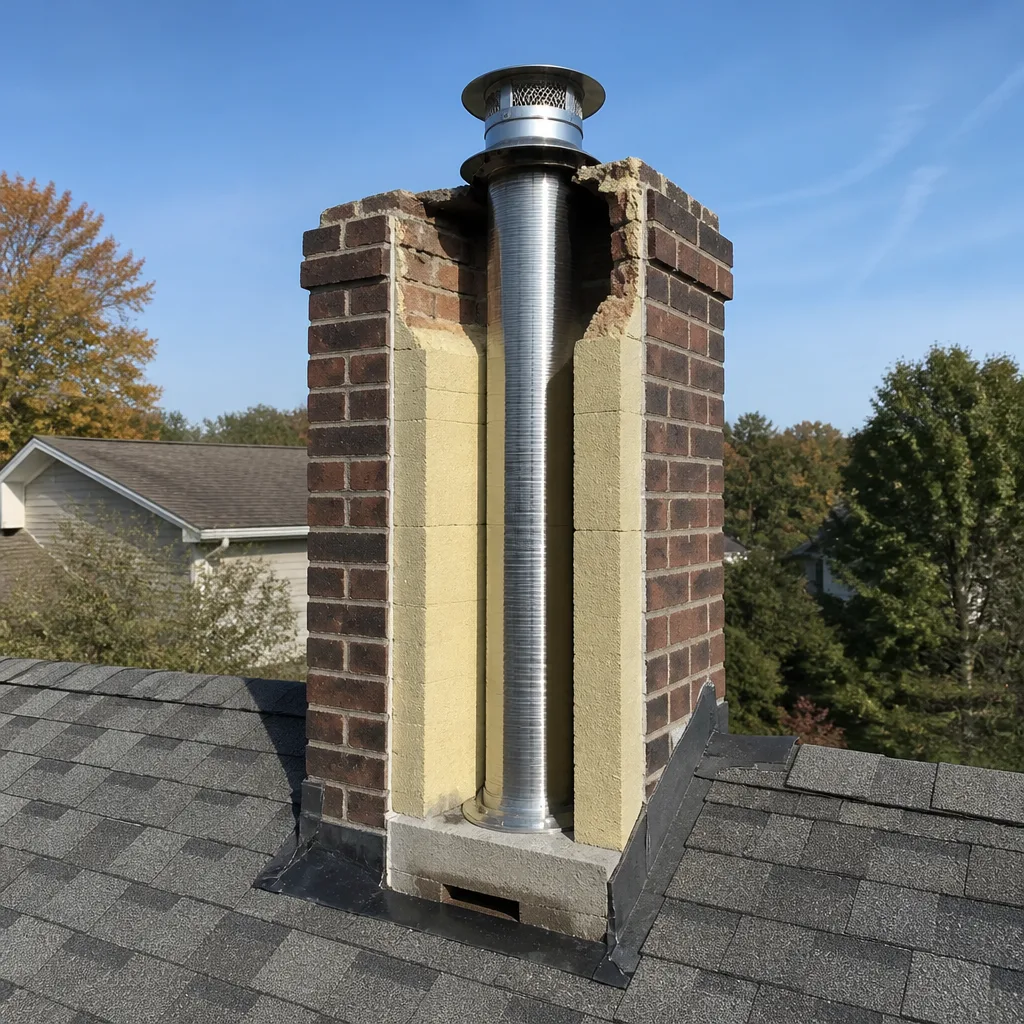 Flue relining
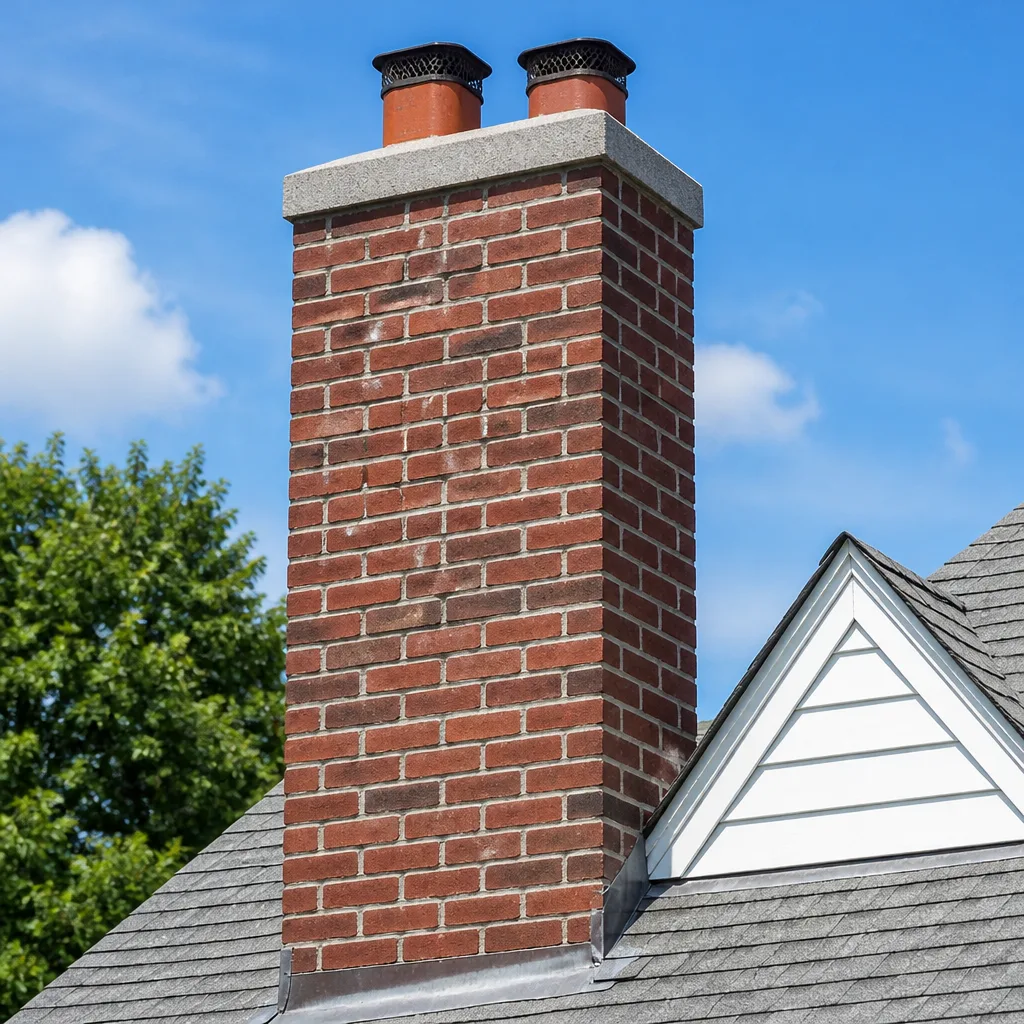 Masonry repair
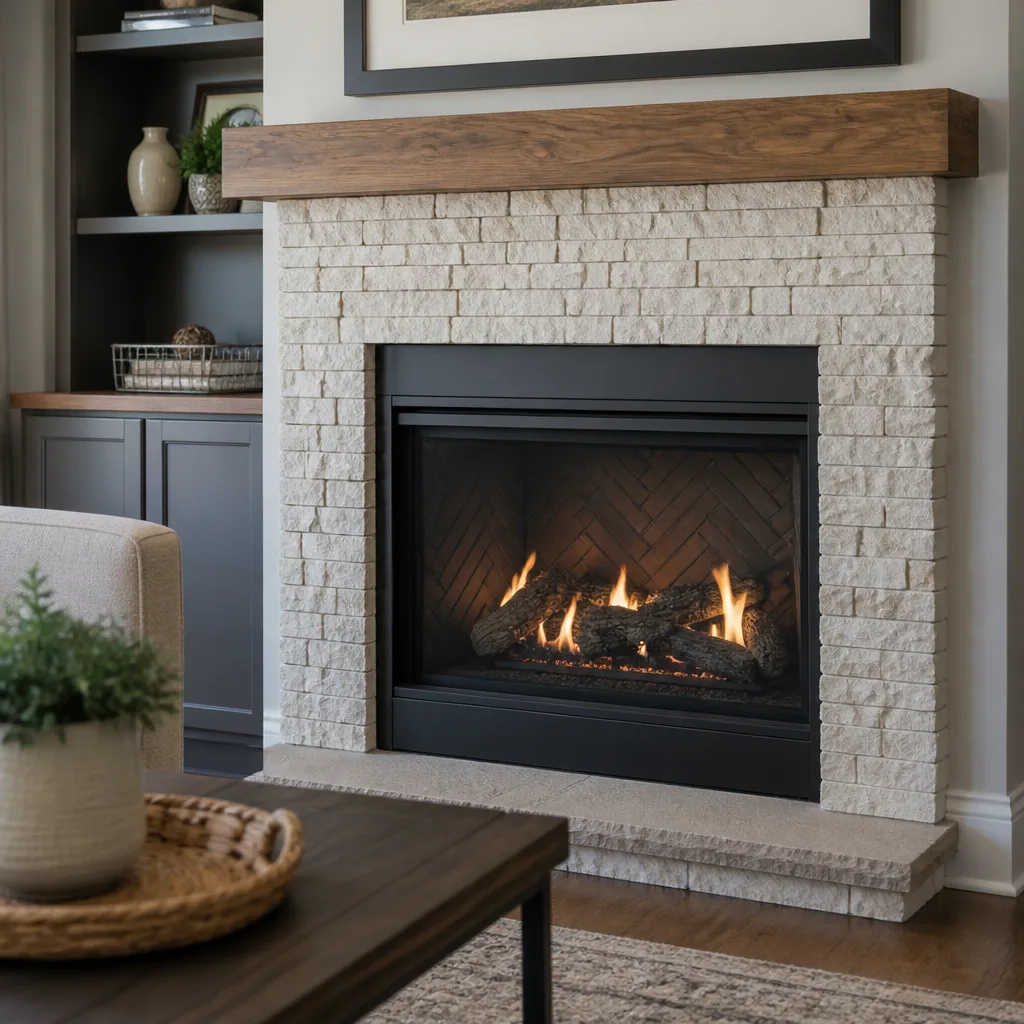 Gas fireplace service
Level 1 sweep and inspection to the NFPA 211 annual standard - flue, crown, cap, and flashing checked and photographed
Chimney sweep logs do not sweep chimneys. They loosen some creosote - which then falls where a brush and vacuum still have to collect it.
How to Hire a Chimney Cleaning Contractor in San Angelo: A Step-by-Step Guide
Most people hiring chimney help in San Angelo think the hard part is finding someone with a brush. The hard part is finding someone who will tell you no. In a market this size, chimney work gets picked up by general handymen with a rod-and-brush kit, a ladder, and no formal training in what a flue is supposed to look like on the inside. That’s the gap this guide closes. We’ll walk you through the specific certifications to verify, the red flags that show up again and again in smaller markets like San Angelo, why the brands a contractor stocks say something about how they’ll repair what they find, and what a written estimate should itemize before you let anyone near your chimney. This isn’t about finding the cheapest bid. It’s about filtering out the operators who shouldn’t be touching a flue in the first place.
Quick Answer
To hire a chimney cleaning contractor in San Angelo, verify CSIA certification directly on the CSIA website before booking, ask for NFI credentials if you burn gas, and request a written estimate that itemizes brushing, inspection level, and any repair or relining scope. Require before-and-after camera footage of the flue from the same angles, confirm the contractor carries liability insurance, and walk away from anyone who quotes a repair price before inspecting. A qualified sweep inspects first, shows you what they found, and prices the work from evidence you can see.
Styles & brands we work with
- Sweep & inspection
- Caps & crowns
- Flue relining
- Masonry repair
- Gas fireplace service
Table of Contents
- Why certification is the minimum bar, not a bonus
- Which certifications to ask for and how to verify them
- Red flags specific to the San Angelo market
- What the brands a contractor stocks tell you
- What a written estimate should itemize
- Questions to ask about insurance and liability
- A step-by-step vetting process
Why Certification Is the Minimum Bar, Not a Bonus
CSIA certification isn’t a nice extra credential in the chimney industry. It’s the floor. It separates a trained sweep from anyone who bought a rod-and-brush set online and decided to offer chimney cleaning on the side. The Chimney Safety Institute of America puts candidates through a proctored exam covering venting, combustion, code, and inspection standards, and the credential has to be renewed. That matters because a chimney isn’t a straight pipe you scrub clean. It’s a venting system with draft, clearance to combustibles, flue sizing relative to the appliance, and masonry or liner integrity to account for. A sweep who doesn’t know those variables can’t tell you what’s actually wrong.
NFI certification, from the National Fireplace Institute, is the parallel credential for gas and wood appliance work. If you have a gas insert or a gas log set, ask for NFI specifically. CSIA covers the venting system broadly. NFI covers the appliance and its installation context. A contractor who holds both is signaling they understand how the two systems interact, which is where a lot of problems hide.
In our experience, the certification question is also a good character test. A trained sweep will tell you their CSIA number without hesitating. An untrained one will either get vague, claim a certification they don’t have, or steer the conversation back to price. That’s the moment you learn what you needed to know.
Which Certifications to Ask For and How to Verify Them
Don’t take a certification claim at face value. Any contractor can print “CSIA certified” on a truck door. Verification takes about two minutes and it’s the single most valuable step in this entire guide.
Here’s the process:
- Ask for the certification name and the card or number. A real CSIA-certified sweep carries a photo ID card issued by the institute. Ask to see it or get the number.
- Look it up on the CSIA website. The Chimney Safety Institute maintains a searchable directory of certified sweeps by ZIP code and name. Search San Angelo and confirm the name you were given appears.
- For gas appliance work, check NFI. The National Fireplace Institute lists credentialed professionals on its own site. Search by name and confirm the credential is current, not lapsed.
- Ask what happens if the certification lapses. Continuing education and renewal are part of keeping the credential. A sweep who tracks their renewal date takes the work seriously.
- Ask which inspection standard they work to. CSIA-trained sweeps follow a defined three-level inspection framework. Level one covers a standard cleaning visit. Level two includes camera inspection and is what you want when you’ve just bought a house or changed appliances. Level three is invasive and rare.
If a contractor can’t produce a verifiable CSIA or NFI number, you’ve found your answer. Don’t book. The training gap is the safety gap, and no price discount makes up for it. For the work itself, our chimney sweep page covers what a proper visit includes from start to finish.
Red Flags Specific to the San Angelo Market
Smaller markets have their own warning signs. In a metro with hundreds of chimney companies, the bad operators get filtered by competition and review volume. Here, an unqualified handyman can stay under the radar for a long time because there isn’t much to compare against. These are the flags we’d tell a neighbor to watch for.
- No physical address. A legitimate local firm has a verifiable business location. A truck and a burner phone number with no address listed anywhere is a flag. Ask where they’re based. If they dodge, move on.
- No camera footage offered. Modern sweeps run a camera down the flue. If a contractor never offers before-and-after footage, you have no way to verify what they cleaned or what they claim to have found. That absence is telling.
- A quote given without an inspection. Nobody can price a chimney repair over the phone. If you’re quoted a relining cost before anyone looked inside, you’re being sold, not diagnosed.
- “While we’re here” upselling. Be wary of a sweep who finishes brushing and immediately finds three thousand dollars of work with no photos to back it up. Repairs should follow evidence, not a schedule.
- Generic materials with no brand names. A professional sweep specifies the liner or cap by name. Off-brand substitutes aren’t always wrong, but a contractor who can’t tell you what they use is a contractor who bought whatever was cheapest.
- No liability insurance. Ask directly and get it in writing. A sweep working on a roof and inside your home should carry coverage, and a genuine operator won’t be offended by the question.
San Angelo’s housing stock spans a lot of ages, from older homes near downtown to newer construction on the edges. That variety means a sweep has to read each flue on its own terms, and a generalist with one kit and one method will miss what a trained eye catches. That’s why the vetting process matters more here than in a big-city market.
What the Brands a Contractor Stocks Tell You
Here’s a signal most homeowners overlook: the materials a contractor names. A sweep who specifies DuraFlex for flexible liner systems, HeatShield for flue resurfacing, and Copperfield or Olympia Chimney for caps and covers is telling you something about how they approach repairs. Generic supplies from a hardware store can pass a casual inspection. Professional-grade materials are built to meet the standard, not just to clear it.
What does each one actually mean in practice?
- DuraFlex is a flexible stainless liner system, specified by professional sweeps across the country for relining jobs. A contractor who works with DuraFlex can handle a complex relining, not just a surface cleaning.
- HeatShield is a resurfacing compound designed to restore deteriorating mortar joints inside the flue without pulling the whole liner. It’s a cost-conscious repair option for damage that doesn’t yet require a full reline, and many basic sweep companies simply don’t offer it.
- Copperfield, Olympia Chimney, and Famco make caps and covers. A contractor who carries multiple brands can fit the right cap to your chimney’s profile instead of forcing one size fits all.
When a contractor names these products, you’re not looking at marketing. You’re looking at a materials decision made before the truck rolled out. Off-brand substitutes exist, and they’re often cheaper. The difference shows up a few seasons later, when the liner or cap has to hold up to actual use. A general handyman with generic supplies is gambling with your chimney’s venting performance. Ask what brands the sweep stocks and installs. The answer tells you whether they’re built for longevity or for a quick turnaround.
What a Written Estimate Should Itemize
A written estimate is your protection. Verbal pricing is how disputes start, and in chimney work the dispute is usually about what “cleaning” was supposed to include. Get it in writing, and read it before you sign.
A legitimate estimate for chimney work in San Angelo should itemize these line items:
- Brushing and cleaning scope. Which flue or flues, which appliance, and what the sweep is actually removing.
- Inspection level. Whether it’s a level one visual inspection or a level two with camera. Level two is standard when you’ve just purchased a home or changed appliances.
- Liner evaluation. What condition the liner is in and whether it needs repair, resurfacing, or replacement, with the evidence behind the recommendation.
- Any repair or relining scope. If HeatShield resurfacing or a DuraFlex liner is recommended, the estimate should say what’s being installed and why.
- Cap and cover work. If a new cap is needed, the brand and the fit should be stated.
- Disposal and cleanup. What happens to the soot and debris, and who cleans up.
What should you walk away from? An estimate that says “chimney cleaning – $X” with nothing else. A quote that bundles repairs into the cleaning price before any inspection. And any estimate with no mention of inspection level, because that’s the line a sweep uses to hide from accountability. If the written estimate doesn’t itemize, ask them to revise it. If they can’t or won’t, that’s your answer. When you’re ready to book a visit that starts with evidence, our Chimney Sweep San Angelo page lays out what that looks like.
Questions to Ask About Insurance and Liability
The insurance conversation feels awkward, so most homeowners skip it. Don’t. Ask these questions before you book, and get the answers in writing where you can.
- Do you carry general liability insurance, and can you send a certificate of insurance? Any legitimate contractor can produce one. It’s not a favor, it’s standard practice.
- Are you covered for work on roofs and ladders? Chimney work involves height. Confirm coverage extends to the physical work, not just the business in general.
- What happens if a repair fails within a season? Ask how they handle a call-back. A HeatShield resurfacing or a DuraFlex liner that fails prematurely should be covered. Get the warranty terms in writing before the work starts.
- Who is actually doing the work? If the person who quoted you isn’t the person who shows up, ask who the crew is and what training they have. Certification applies to the person on the roof.
- What’s your process if you find something unexpected? A damaged crown, a cracked flue tile, a bird’s nest. A good sweep stops, documents it, and re-quotes before proceeding. Any contractor who just keeps working and adds charges is one to avoid.
These questions filter quickly. A trained, insured operator answers them without friction. An unqualified one gets defensive or vague. Either response tells you what you need to know.
A Step-by-Step Vetting Process
Here’s the whole thing in one ordered process. Work through it before you book, and you’ll avoid the operators who shouldn’t be in your flue.
- Search CSIA’s directory for San Angelo. Start with the certified list. It’s the fastest way to narrow the field to trained sweeps.
- Ask for the certification number. Confirm the name you were given matches the directory entry, and check NFI separately if you burn gas.
- Ask for a written estimate that itemizes scope. Brushing, inspection level, liner evaluation, repair scope. No itemization, no booking.
- Ask what brands they stock and install. DuraFlex, HeatShield, Copperfield, or Olympia Chimney are signals of a professional materials decision. Generic answers are a flag.
- Confirm insurance in writing. General liability and roof-work coverage. Get the certificate.
- Ask for before-and-after camera footage. Footage from the same angles is how you verify the cleaning and any damage claim. If they don’t offer it, ask.
- Ask the call-back question. What happens if a repair fails within a season, in writing.
That’s the whole filter. It takes maybe an hour of calling around. It’s the difference between a sweep who cleans your flue and one who just moves soot around. If you want a contractor who works with professional-grade materials and covers the full venting system, you can reach ours through the San Angelo service page.
One more note: don’t forget the dryer vent. A chimney sweep visit is a natural time to have the dryer vent cleaned too, because both are exhaust paths and both are fire risks. The NFPA links dryer vent fires to nearly 2,900 home fires a year. A specialist who handles both under one call covers ground a chimney-only visit leaves behind. Our dryer vent cleaning page covers what that service involves.
Common Mistakes to Avoid
- Hiring on price alone. The cheapest bid in a small market is often the least trained operator. Certification and materials matter more than the invoice.
- Skipping the CSIA verification. “CSIA certified” on a truck door means nothing until you’ve looked it up on the institute’s site. Two minutes of checking beats a season of regret.
- Accepting a repair quote before an inspection. No one can price a liner replacement without looking inside. If the number comes before the camera, the number is a guess.
- Not asking for camera footage. If you can’t see the flue before and after, you can’t verify the cleaning or the damage claim. Ask for it every time.
- Forgetting the dryer vent. Chimney-only specialists often skip it. Both venting paths are fire risks and both deserve a professional look.
- Assuming a general handyman covers it. A handyman with a brush kit can knock soot loose. They can’t read a flue’s draft, clearance, or liner condition. That’s the training gap that matters.
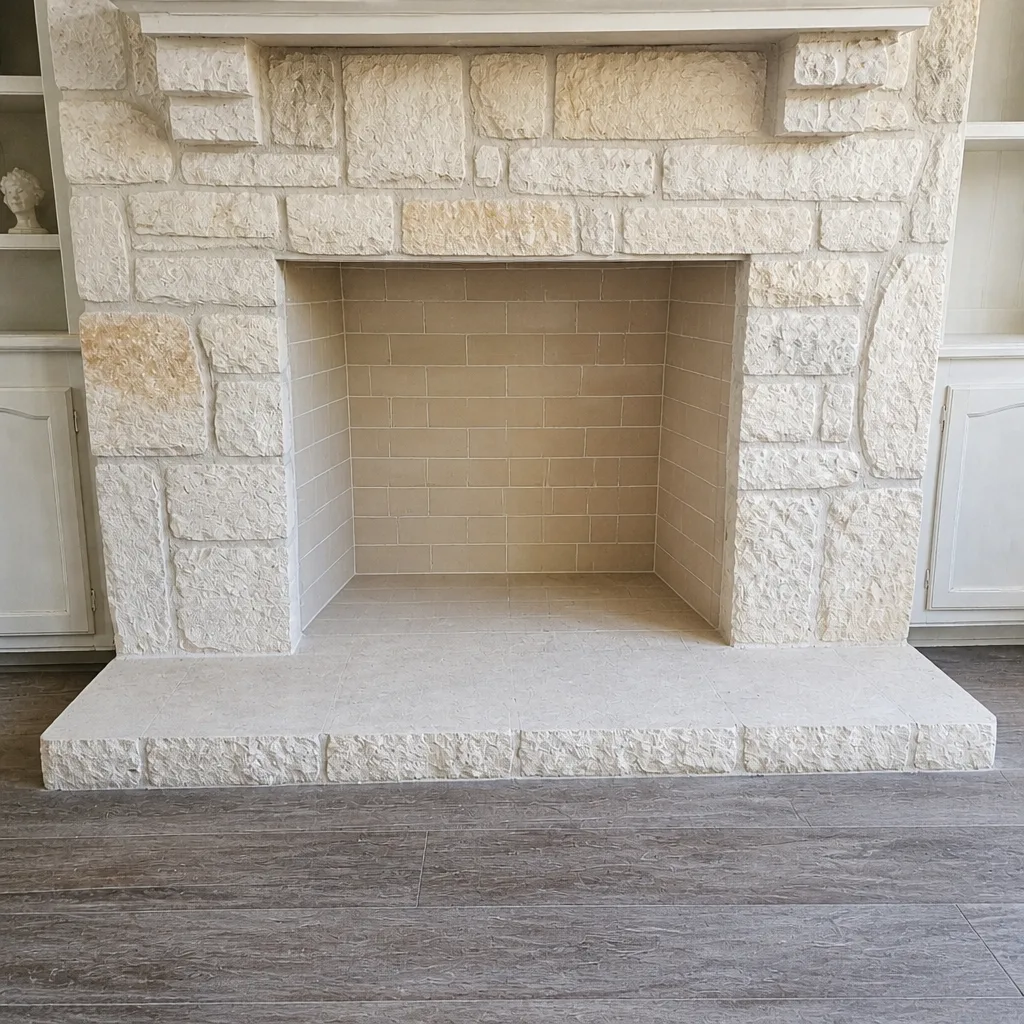
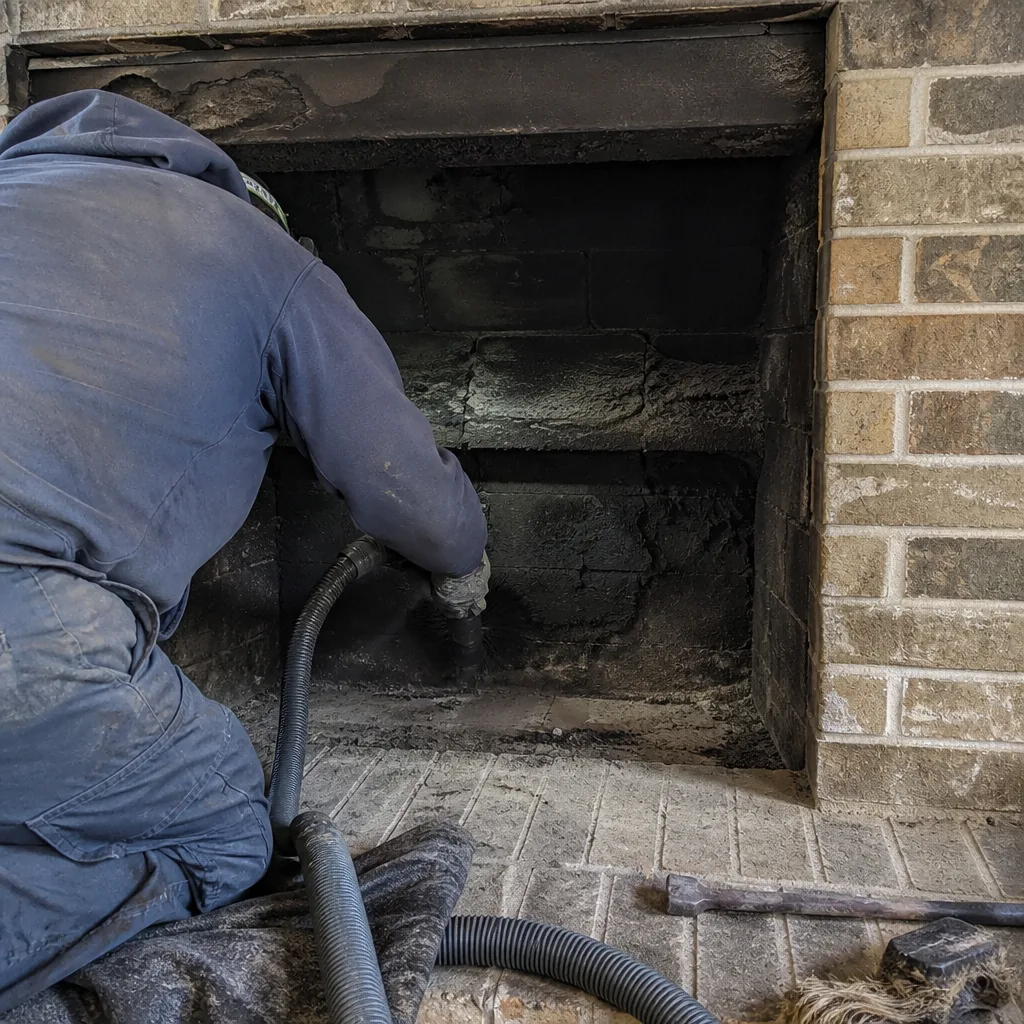
See the difference
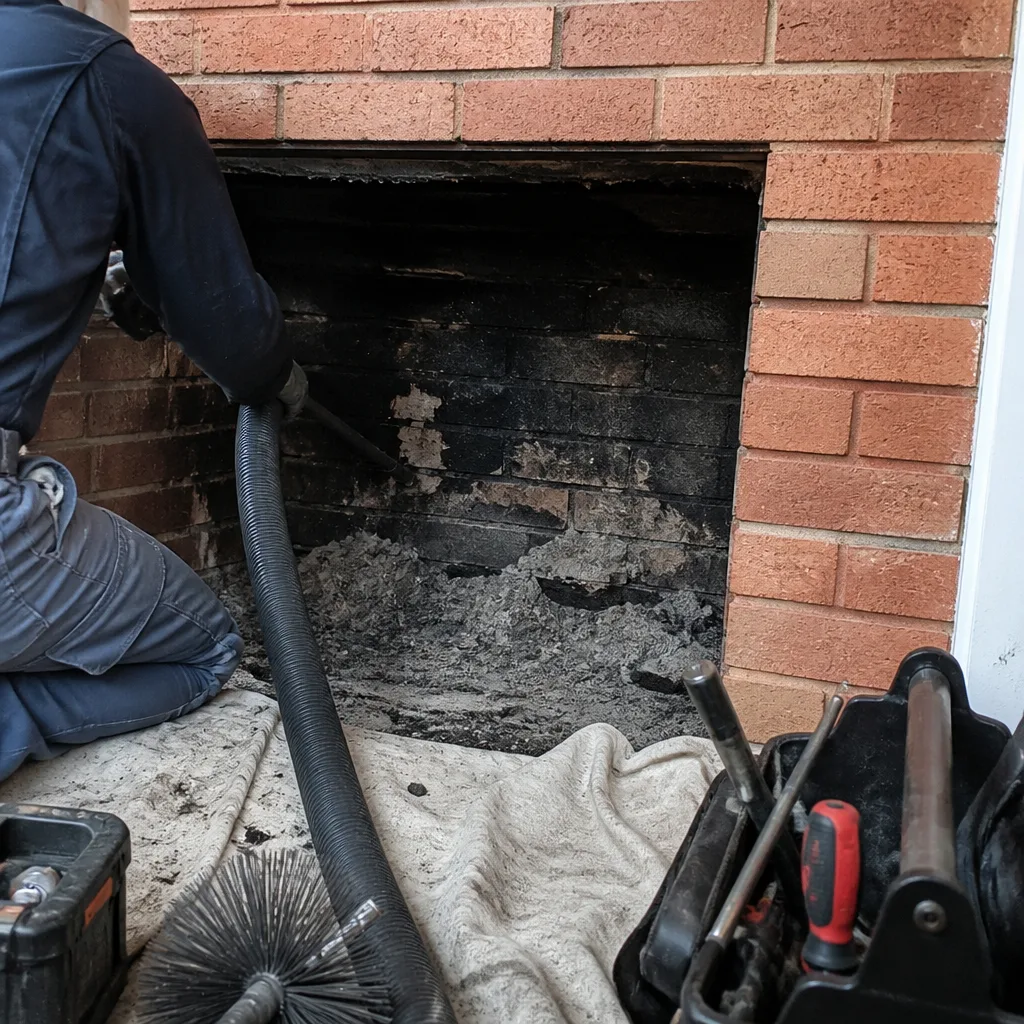 Before
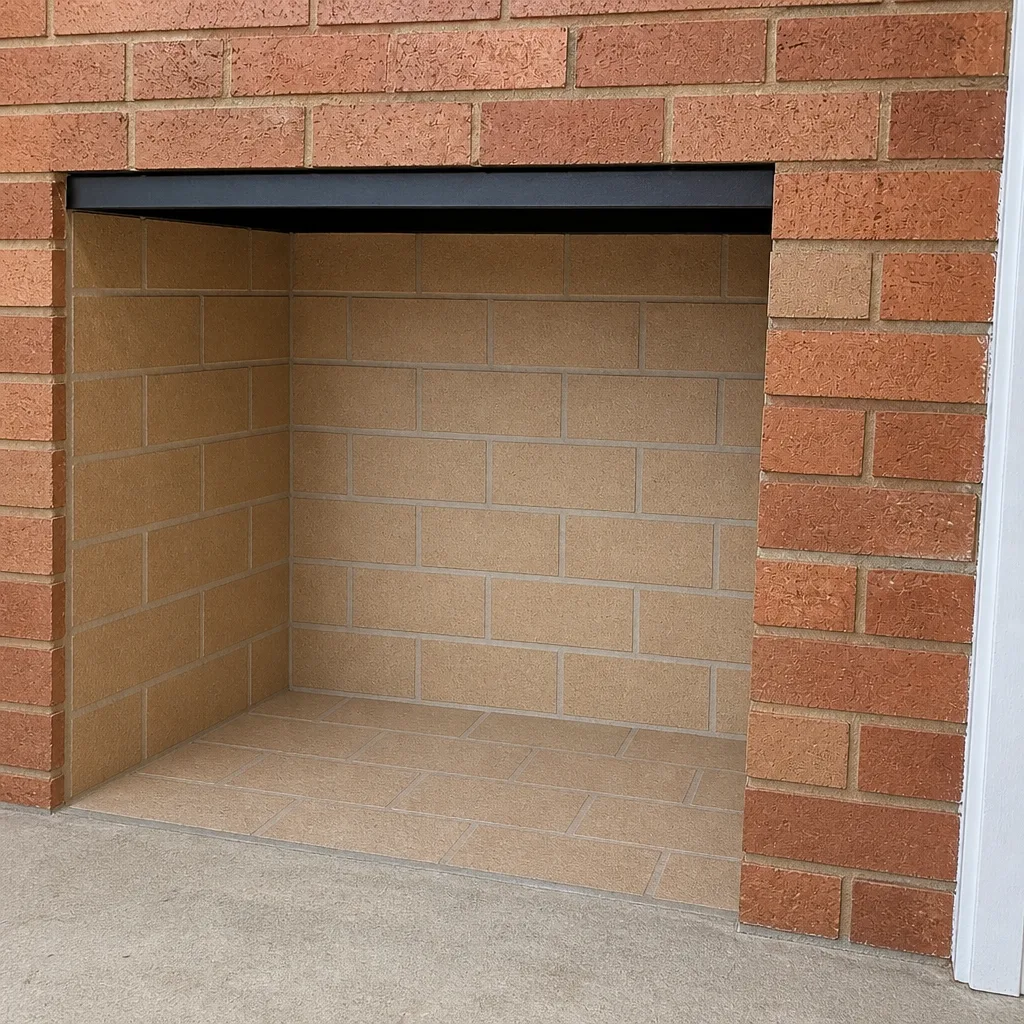 After
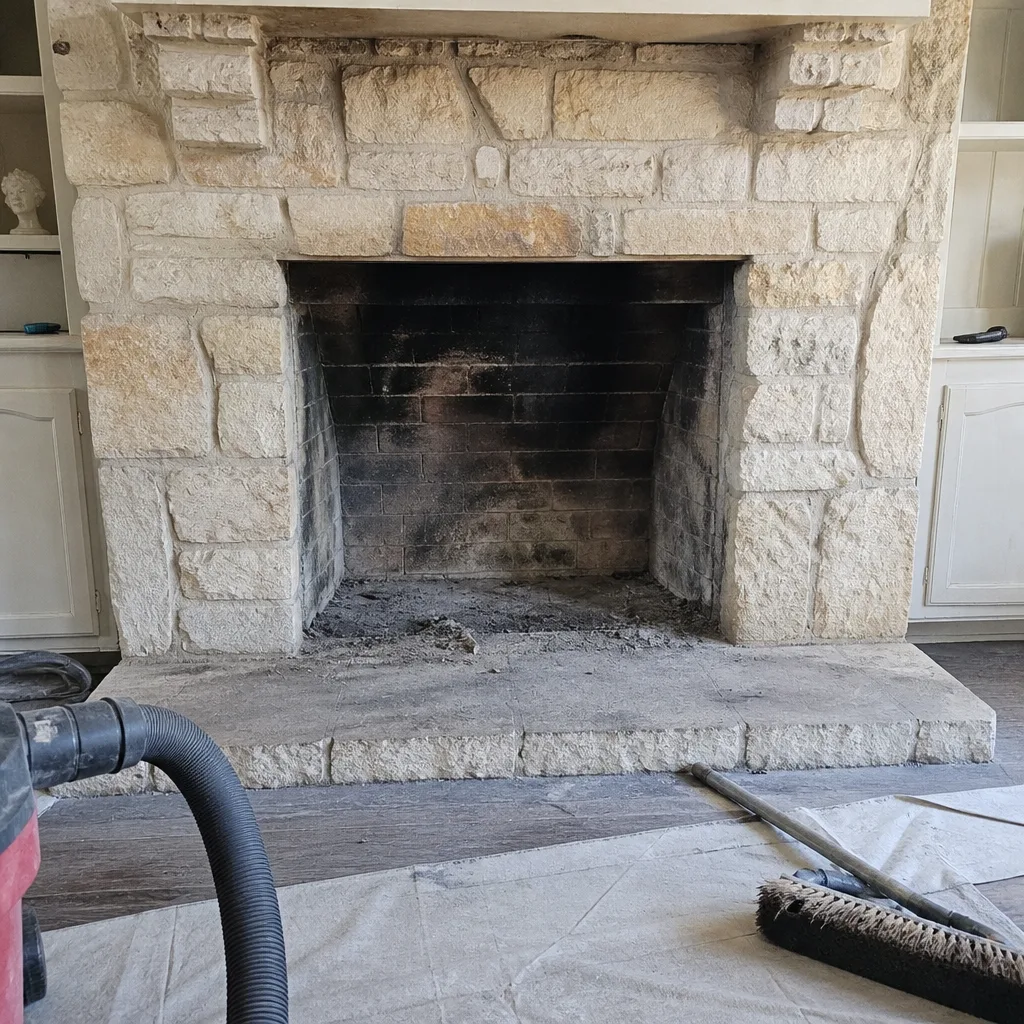 Before
 After
 Before
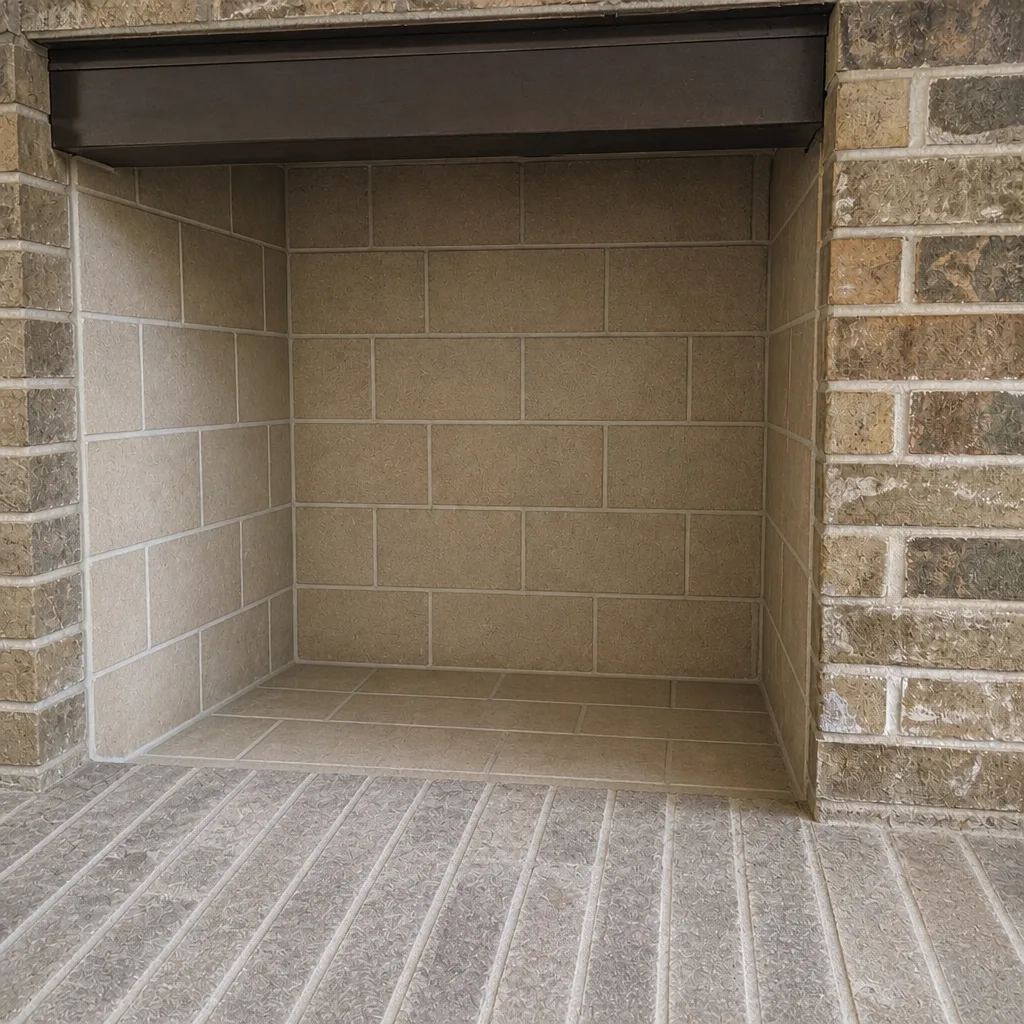 After
When to Call a Professional
Some chimney situations are clearly a call-a-professional moment. If you’ve just bought a home in San Angelo and don’t know when the flue was last cleaned, book a level two inspection with camera before the first fire of the season. If you’ve changed appliances, added a gas insert, or noticed draft problems, that’s a professional call. If smoke backs into the room, if you smell creosote, or if the chimney has visible cracking at the crown or flashing, don’t burn until someone looks. If you can’t remember the last sweep, that’s your answer too. Chimney Sweep San Angelo offers free estimates in San Angelo. Call (833) 946-3155. We answer 24/7. Fast dispatch from 7am to 7pm, Sunday through Friday.
Frequently Asked Questions
A standard sweep in San Angelo typically runs within a modest range depending on the flue, the appliance, and whether camera inspection is included. The written estimate sets the final price, and estimates are free. Call (833) 946-3155 for an exact quote.
Not always. A damaged flue interior can sometimes be restored with HeatShield resurfacing instead of a full liner replacement, which is a cost-conscious option when the damage is confined to mortar joints. The recommendation should follow camera evidence you can see. Nothing should be recommended without it. Call (833) 946-3155 for an exact quote.
A chimney used regularly for wood should be swept annually, and more often if you burn heavily or notice creosote buildup. Gas appliances still need an annual check even though they produce less soot. Call (833) 946-3155 for an exact quote.
Creosote accumulates in the flue and becomes combustible, which is the mechanism behind chimney fires, and a blocked or damaged flue can allow carbon monoxide into the home. The risk builds quietly between visits. Call (833) 946-3155 for an exact quote.
Yes, and it’s worth asking for both at once. Both are exhaust paths and both are fire risks, so a full-service venting specialist covers ground a chimney-only sweep leaves behind. Dryer vent cleaning is a standalone service we offer. Call (833) 946-3155 for an exact quote.
Ask for the CSIA number, then look it up on the Chimney Safety Institute’s website directly instead of trusting the truck door. For gas appliance work, verify NFI separately on its own site. If they can’t produce a verifiable number, don’t book. Call (833) 946-3155 for an exact quote.
The Bottom Line
Hiring a chimney contractor in San Angelo comes down to verification. Check the CSIA certification on the institute’s site, confirm NFI if you burn gas, get a written estimate that itemizes brushing, inspection level, liner evaluation, and any repair scope, and ask what brands the contractor stocks. Professional-grade materials and a documented inspection are the signals of a sweep who stands behind the work. Anything less is a gamble on your flue. The filter takes an hour. Skipping it takes a season to regret. We come prepared to clean it and fix it if needed, and we’d rather show you the camera footage than tell you what to believe.
Contact
If you’re ready to book a chimney sweep in San Angelo with a contractor who works with professional-grade materials and covers the full venting system, call (833) 946-3155 for a free estimate. We answer 24/7. Fast dispatch from 7am to 7pm, Sunday through Friday. Our technicians have up to 11 years of experience, and the price is set per job by the written estimate before any work begins.
Written by the team at Chimney Sweep San Angelo.