
Last updated November 15, 2026
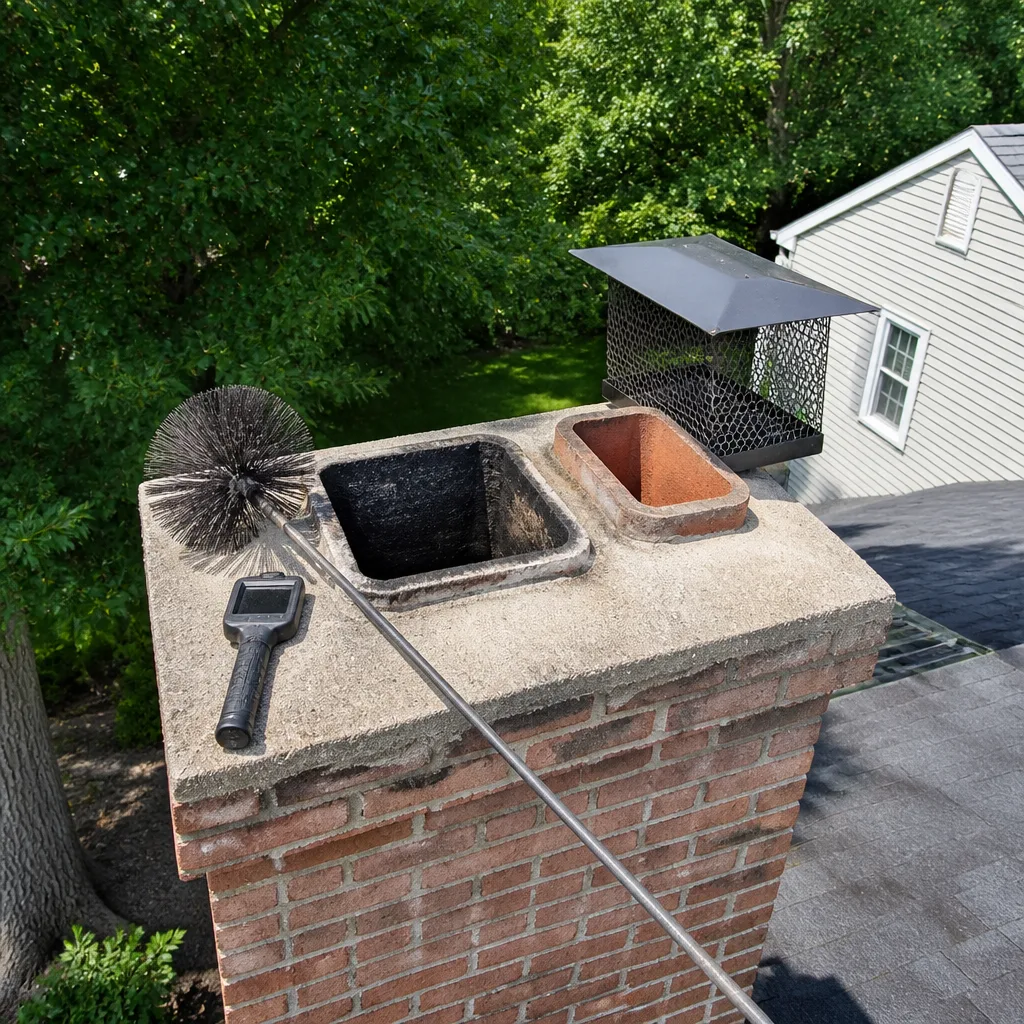 Sweep & inspection
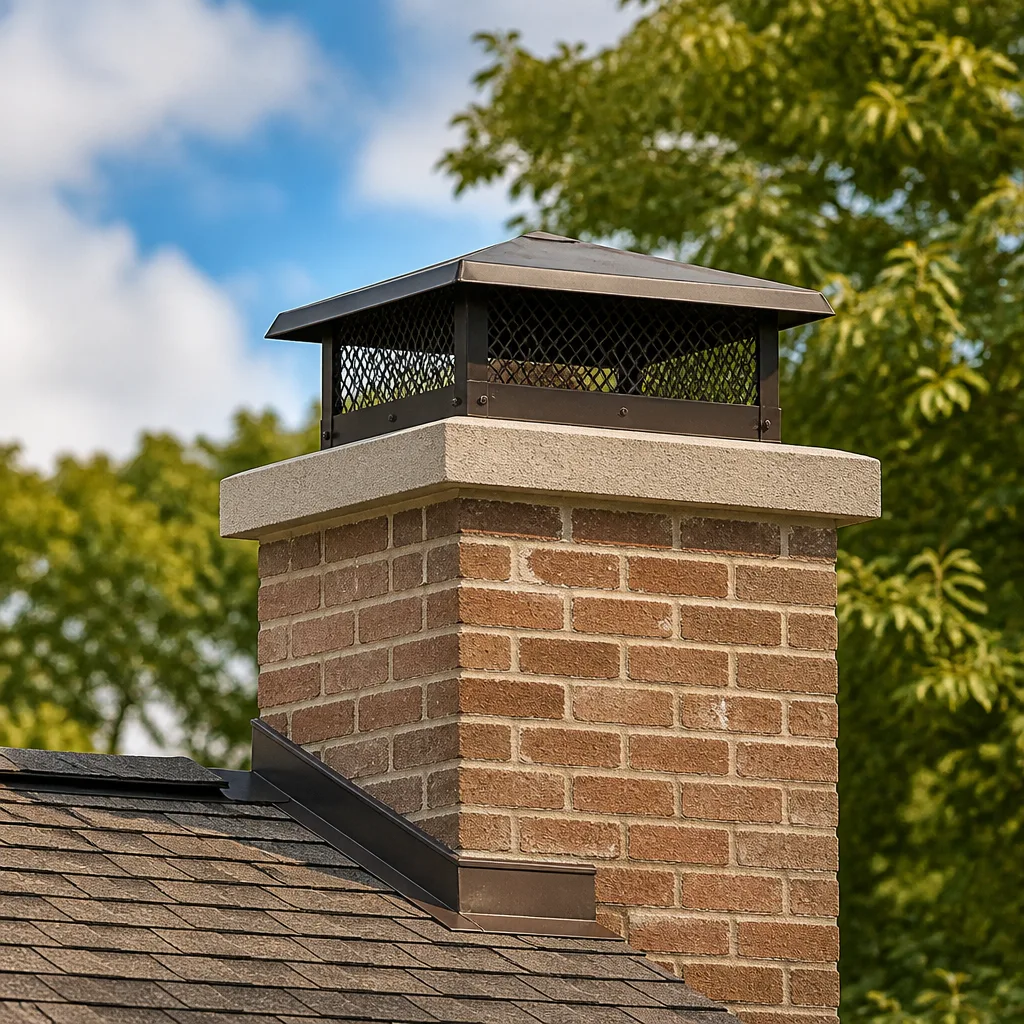 Caps & crowns
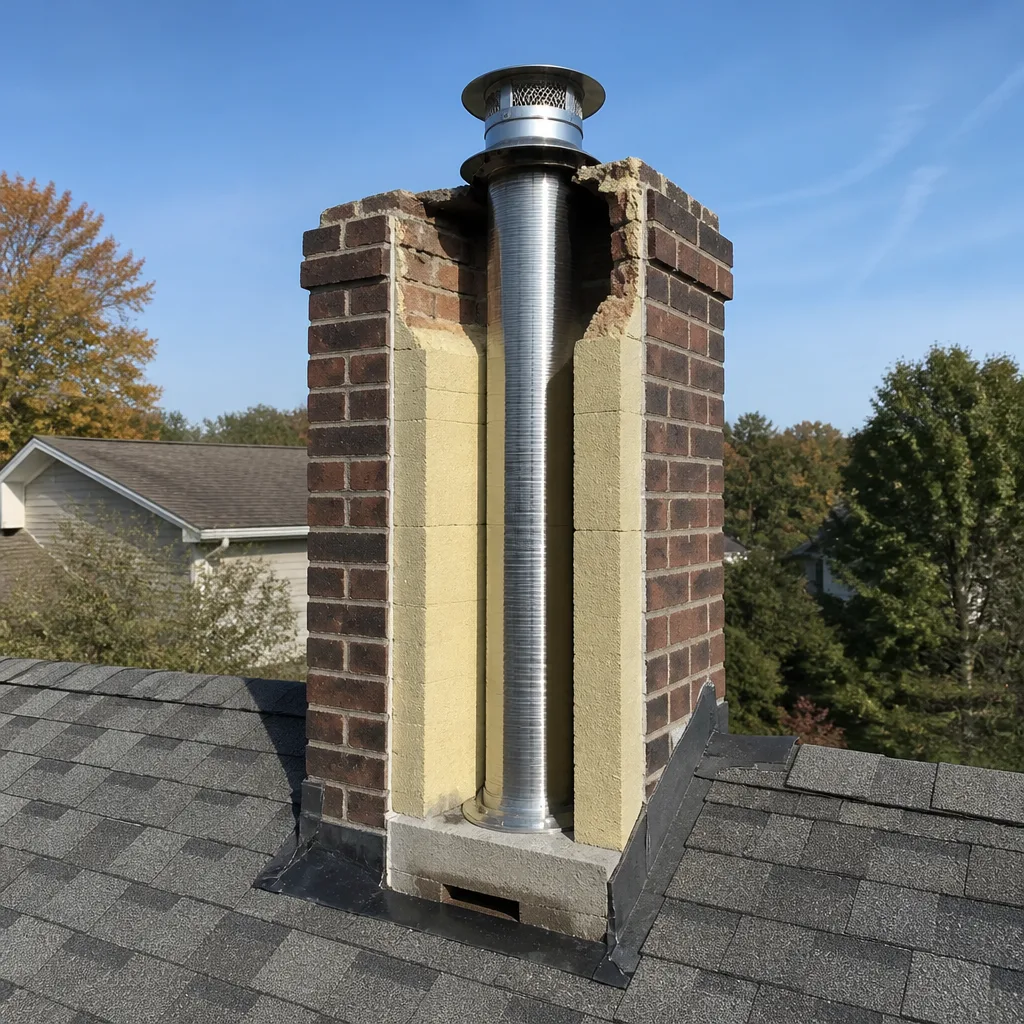 Flue relining
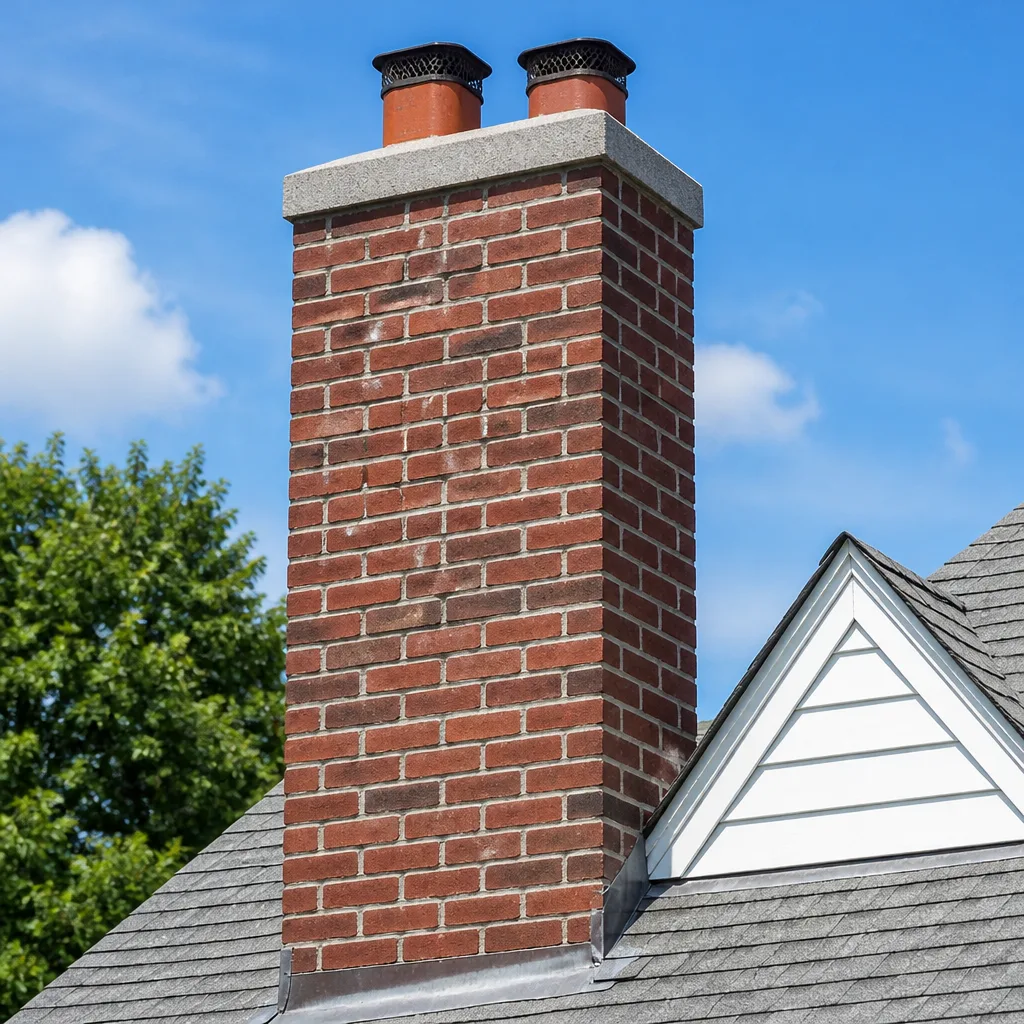 Masonry repair
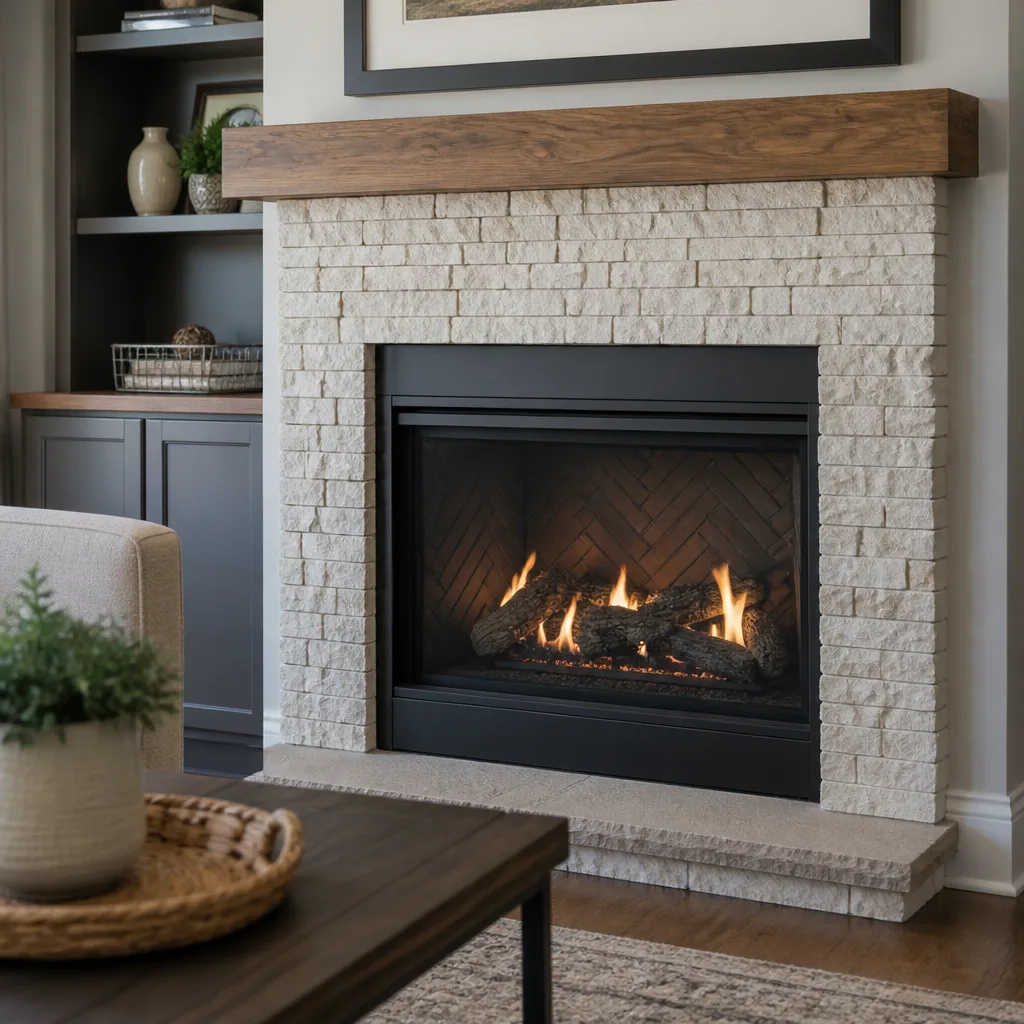 Gas fireplace service
Level 1 sweep and inspection to the NFPA 211 annual standard - flue, crown, cap, and flashing checked and photographed
Chimney sweep logs do not sweep chimneys. They loosen some creosote - which then falls where a brush and vacuum still have to collect it.
Chimney Sweep Troubleshooting in San Angelo: Common Problems and How to Fix Them
If smoke is backing into your living room after a cleaning, your chimney probably wasn’t the problem. Your draft was. A dirty flue and a broken draft are two completely different diagnoses, and confusing them is the most common, and costliest, mistake homeowners make. A brush can only remove creosote and soot from a flue that’s built correctly to begin with. When a chimney fails, it’s usually because something structural has changed: a liner has cracked, a cap has failed, a mortar joint has gone soft, or the house has been sealed tighter than the flue can handle. This guide walks you through the symptom-to-cause logic we use in San Angelo every week, so you can tell the difference before you call anyone.
Quick Answer
Most chimney problems in San Angelo trace back to one of four causes: backdrafting from house pressure or wind, a physical blockage, a breached liner, or a failed cap or crown. A routine sweep fixes only the blockage category. Backdrafting, liner damage, and crown or cap failure all require inspection, camera work, and usually a specific repair (resurfacing, relining, or cap replacement) rather than just a cleaning. Match your symptom to the cause before you book a visit, and you’ll avoid paying for the wrong service twice.
Styles & brands we work with
- Sweep & inspection
- Caps & crowns
- Flue relining
- Masonry repair
- Gas fireplace service
Table of Contents
- The Symptom-to-Cause Diagnostic Tree
- Why San Angelo Wind Makes Your Chimney Act Dirty When It Isn’t
- Reading the Outside of Your Chimney: Spalling, Efflorescence, and Staining
- HeatShield Resurfacing vs. DuraFlex Relining: Which One Fixes Your Flue?
- Cap and Crown Failure: The Repair Most Homeowners Miss
- What You Can Safely Check Yourself vs. What Needs a Camera Inspection
- The Dryer Vent Problem That Mimics Chimney Trouble
- How Often Does a San Angelo Chimney Actually Need Sweeping?
The Symptom-to-Cause Diagnostic Tree
Before you call anyone, work through the symptoms below. Each row points to a likely cause and the type of repair that actually fixes it. If several symptoms line up, that usually confirms a single underlying issue rather than several separate ones.
Symptom 1: Smoke rolls back into the room on light-up
Likely cause: backdrafting from negative pressure in the house or a downdraft from wind. This is very common in San Angelo on windy days along the Concho River corridor. It’s rarely a blockage. If the chimney draws fine once it’s warmed up, you’re looking at a draft problem, not a dirt problem.
Symptom 2: Weak draft all the time, even in calm weather
Likely cause: a partial obstruction inside the flue or at the top, a collapsed liner section, or a nesting animal. This one needs a camera inspection. A brush may pass it without clearing it, which is exactly why a cleaning alone doesn’t solve this symptom.
Symptom 3: Smoke smell in the house on warm days with no fire
Likely cause: residual creosote in the flue off-gassing as the house pressure changes, or a small crack that lets air move through masonry. Creosote smell without a fire present usually points to a cleaning being overdue, but the pressure side needs checking too.
Symptom 4: Water stains on the ceiling or firebox walls
Likely cause: a failed cap, a cracked crown, or deteriorated flashing at the roofline. This is a water intrusion problem, not a firebox problem. Cleaning won’t help, and putting it off makes the mortar damage worse.
Symptom 5: Rust or white powder on the firebox or flue tile
Likely cause: efflorescence from moisture moving through the masonry. That white staining is the mineral signature of water traveling through the wall, which means water is getting in somewhere up top. A moisture inspection locates the entry point.
Symptom 6: Fire burns poorly, hard to start, smoky
Likely cause: house pressure, oversized flue for the firebox, or a damaged liner breaking the smooth airflow. Modern tight homes in San Angelo can make an old fireplace act like this even when the chimney is clean.
Why San Angelo Wind Makes Your Chimney Act Dirty When It Isn’t
San Angelo sits on the Concho River corridor, and wind is part of daily life here. That matters for chimneys because wind doesn’t just blow past a house. It creates pressure differences across the roof, and those pressure differences are what a chimney breathes on. On a gusty day, the leeward side of the house (whichever side is sheltered from the wind) sits in low pressure, and if the house is sealed tightly, that low pressure pulls air down the chimney instead of letting it rise.
The result looks exactly like a dirty chimney. Smoke spills into the room on light-up. The fireplace feels stubborn. Someone coming from a house in another part of town with the same model fireplace has no problem at all. Same flue, same fuel, different pressure.
Here’s what usually tells us the two problems apart:
- Dirty chimney: weak draft on every fire, all weather, gradually worse over the season. Creosote visible on the flue walls.
- Draft problem: smoke backs up on light-up or on gusty days only, then settles once the flue is warm. No visible creosote buildup beyond normal.
- Both: creosote visible in the flue and smoking back on windy days. This means the draft problem has been there long enough to allow buildup, and both need attention.
The fix for a draft problem is usually one of these: extending the flue height so it clears the pressure zone at the roofline, adding or replacing a cap that’s not restricting exhaust, opening a small combustion air source inside the house, or upgrading the chimney termination. None of these is a cleaning. In our experience, this is where a lot of San Angelo homeowners get talked into a cleaning that doesn’t solve the symptom, and then get sold a much more expensive repair later because the draft issue quietly caused accelerated creosote adhesion.
If your smoke problem is weather-linked, tell whoever you call that on the phone. A sweep worth their salt will know the difference before they arrive, and the diagnosis changes the entire visit.
Reading the Outside of Your Chimney: Spalling, Efflorescence, and Staining
The outside of your chimney is the diagnostic chart you can read without climbing on the roof. The masonry is telling you what’s happening inside two or three years before the interior damage shows up. Learning to read three signals saves a lot of money.
Spalling
Spalling is masonry where the face has flaked or popped off, leaving a rough, pitted surface. It’s the sound of water getting into the brick, freezing, and pushing the face off on the next thaw. Even in a mild San Angelo winter, a wet brick that cycles between warm days and cold nights can spall. On a chimney, spalling is usually concentrated around the cap, crown, or the top few courses, because that’s where water gets in first. Once it starts, it accelerates: more water gets in through the broken face, and more of the face breaks off.
Efflorescence
Efflorescence is the chalky white powder that appears on the chimney’s surface. It’s salt pushed to the outside as moisture moves through the brick. It’s not damage by itself, but it’s a strong indicator that water is moving through the masonry. If efflorescence reappears after you scrub it off, water is still entering somewhere, and the source needs to be found before it becomes spalling.
Staining
Dark or rust-colored staining below the cap or along the crown is usually a sign that water is pooling somewhere it shouldn’t. Rust-colored streaks under a metal cap mean the cap’s fasteners or seams are failing. Dark streaks down the side usually mean the crown has cracked and is shedding water down the chimney face rather than away from it. A hard white or gray haze around a single vertical line often points to a crack that’s wicking moisture.
What these three signals share is that they’re all water problems, and none of them are fixed by a chimney sweep. A sweep can tell you the flue is clean, but a clean flue behind a spalled chimney is a chimney that’s going to need major masonry work in a few years. Getting eyes on the exterior is part of a proper inspection, not a separate visit.
If you’re already seeing spalling or active efflorescence, the guide on San Angelo chimney services explains how the repair categories break down and what to ask about.
HeatShield Resurfacing vs. DuraFlex Relining: Which One Fixes Your Flue?
This is the decision that separates an honest repair from an upsell. Both fixes work. They fix different problems. Matching the repair to the actual condition of the flue is where the money is either spent well or wasted.
HeatShield is the right answer when…
HeatShield is a chimney flue resurfacing compound. It’s applied to the interior walls of a flue to restore deteriorated mortar joints and seal small cracks without replacing the entire liner. It’s the repair of choice when the flue tiles are intact and properly sized, the mortar joints between tiles are soft or eroded, but the tiles themselves haven’t shifted or cracked through. It’s also a strong choice when the original flue is still the right size for the appliance and you simply want to stop joint deterioration from becoming a bigger problem.
What HeatShield won’t do is fix a flue that’s the wrong size, a flue with a fully cracked tile that’s pulling away from the wall, or an unlined flue in a house with a modern wood-burning appliance. In those cases, resurfacing just delays the inevitable and may not meet the venting standard once it’s done.
DuraFlex liner replacement is the answer when…
DuraFlex is a flexible stainless steel liner system, and it’s the standard fix for a flue that can no longer be trusted as a path for exhaust. That means a flue with one or more tiles broken through, a flue whose shape or slope no longer allows a proper draft, or an older chimney built without a proper liner that’s now serving a fireplace or wood stove. Once those conditions exist, the flue is a fire path unless it’s fully sleeved.
The rule of thumb we use: if the flue tiles are sound and only the mortar joints have gone soft, HeatShield is the cost-conscious repair. If the tile itself has failed, or the flue was never built to the current venting standard, DuraFlex is the repair that actually restores safety. Anything else is a bandage on a wound.
Why this matters for safety
Creosote is flammable, and a breach in the flue is the path it uses to reach the framing of the house. A chimney fire in a breached flue has an open door to wood framing, which is why liner breaches aren’t something to defer. If a camera inspection finds a breach, relining stops being optional. We won’t recommend relining on a flue that only needs resurfacing, and we won’t resurface a flue that needs relining, because neither choice is the honest one in the wrong case.
Cap and Crown Failure: The Repair Most Homeowners Miss
The cap is a small piece of metal or masonry at the top of the chimney, and it does two jobs most people never think about: it keeps rain and animals out of the flue, and it shapes the way air leaves the top of the chimney. When it fails, you get water intrusion, animal entry, or a sudden draft change, and none of those signs says “cap” on its own.
Caps fail in a few predictable ways:
- Rust-through at the fasteners. The screws or clips give way before the metal does, and the cap lifts or shifts in wind.
- Torn mesh or screen. The screen rusts through, and birds and squirrels get into the flue. This is the most common reason for a sudden blockage on a chimney that had been drawing fine the season before.
- Physical impact. A branch, a storm, or something dropped during roof work creases the cap, and the cap no longer sits flush. The crease is usually the entry point for water.
- Wrong size or profile. A cap that’s too small or too low-profile for the chimney can choke the draft, especially in windy conditions, and it looks fine from the ground.
The crown, meanwhile, is the concrete or mortar slab at the very top of the chimney around the flue. A cracked crown sheds water down the chimney face rather than away from it, and it’s the source of most of the efflorescence and staining we see on San Angelo chimneys. Crown repair is masonry work, but it’s usually much cheaper than the interior damage a small crack eventually causes.
Cap and crown replacement is where a proper inventory matters. We work with Famco, Olympia Chimney, Copperfield, and Gelco caps and covers, so the cap you get actually fits your chimney profile rather than being the closest thing on a truck. A cap that’s the wrong size is a draft problem disguised as a fix.
What You Can Safely Check Yourself vs. What Needs a Camera Inspection
There’s a genuine divide here, and knowing where it sits saves both money and risk. Some of what a homeowner can check is genuinely useful and comes in handy when you call a sweep. Some of it is dangerous and shouldn’t be attempted, even by a handy homeowner.
Safe to check yourself (from the ground or from inside)
- The firebox: look for cracks in the firebrick, loose mortar joints, or a crumbling fireback. Minor surface cracking is often normal; a crack wider than a hairline or one you can catch a fingernail in is not.
- The damper: open and close it and feel for resistance. It should move smoothly and the plate should sit flush against the frame when closed. A stuck-open damper lets heat up the flue all year and is a common, cheap fix.
- The visible cap: look at it with binoculars from the ground. Check for lifting, obvious rust holes, or a missing screen. Take a photo with your phone if you can zoom in.
- The exterior masonry: use the spalling and staining signs above. Same idea, from a distance.
- The smoke test: light a small fire and watch where the smoke goes. It should rise steadily up the flue. If it spills back, note the weather at the time. That detail alone is diagnostic.
Needs a camera inspection from a trained sweep
- The full length of the flue. Creosote buildup, hidden cracks, tile gaps, and animals you can’t hear all live above your line of sight. A camera inspection is the only way to see them.
- Behind the damper. This is where the “smoke shelf” lives, and it’s where blockages and cracks most often hide.
- The crown and cap seams. These need eyes at the top of the chimney, on a proper ladder, with the right footing.
- The masonry joints just below the roofline. This is where water entry starts, and it’s where a sweep’s inspection almost always finds the source of an interior stain.
- Any diagnosis that leads to a repair. A camera inspection with a photo report means the homeowner can see exactly what the technician sees before agreeing to a repair.
Do not put your own camera (phone, borescope, or otherwise) down a flue. The inside of a chimney is a confined space with soot, creosote, sharp edges, and possibly an active hazard. That’s the line between useful homeowner knowledge and genuine risk.
The Dryer Vent Problem That Mimics Chimney Trouble
Here’s a problem worth naming because most chimney-only specialists never look at it. The dryer vent is a venting system too, and it fails in ways that rhyme with the ways a chimney fails. Slow drying, a hot dryer, a faint smell of lint in the laundry room, towels that need two cycles to dry, and no obvious cause on the appliance. Homeowners blame the dryer. The vent is usually the culprit.
A dryer vent clogged with lint is a fire risk, and it’s a hidden one, because the vent is out of sight behind the dryer and above the ceiling. dryer vent cleaning is a standalone service we offer alongside chimney work specifically because it’s the same kind of problem: a hidden, lint-filled path that needs routine clearing and inspection. If your chimney sweep is only looking at the chimney, this vent usually goes unchecked for years.
The signs that your vent needs attention:
- Clothes take longer to dry than they used to, without a change in the dryer setting.
- The dryer or the wall behind it is hot to the touch.
- Burning smell in the laundry room, without a smell of lint in the dryer itself.
- The exterior vent flap doesn’t open fully during a cycle, or the airflow felt at the outside is weak.
- It’s been more than a couple of years since the vent was last cleaned.
If your dryer vent exhausts into a wall, ceiling, or the roof, the full path can only be checked by opening the run from both ends and inspecting it. That’s a professional task, and it’s the same visit as a chimney sweep if you call for both at once. One call covers your chimney and your dryer vent, which is exactly why we offer the two together.
How Often Does a San Angelo Chimney Actually Need Sweeping?
There’s no single number that fits every house. The right answer depends on how much you burn, what you burn, and how cleanly the chimney draws. The general guidance from the chimney industry is that a wood-burning chimney should be inspected once a year and swept when the inspection shows enough creosote buildup to need it. For most San Angelo homeowners who burn wood regularly through the winter, that ends up being a sweep every one to two seasons. For a gas-fired insert, a yearly inspection is the standard, but the sweep interval is longer because gas doesn’t produce creosote.
Factors that shorten the interval in San Angelo specifically:
- Frequent fires. More fires mean more creosote. Even a well-seasoned firewood fire adds a little each time.
- Poorly seasoned wood. Green or damp wood wastes heat up the flue and deposits far more creosote than properly seasoned wood.
- Draft problems. A chimney with a weak or inconsistent draft lets creosote settle unevenly, and it often builds up faster on the sheltered side.
- Older masonry chimneys. A rougher interior surface catches creosote faster than a smooth, newer flue.
Factors that lengthen the interval:
- Very light use, or a gas-fired insert used occasionally.
- A newer flue with intact tile and clean mortar joints.
- A chimney with a consistently strong draft, weather permitting.
The point isn’t the average. The point is that “once a year” is a starting assumption, and the inspection decides the actual interval. Skipping the inspection is the mistake. If your chimney draws well and you burn moderately, one inspection a year and a sweep every other year is a reasonable cadence for most homes in this part of the state.
Common Mistakes to Avoid
- Assuming a cleaning is the fix for smoke backup. If the smoke is weather-linked or only shows up on light-up, you have a draft problem, not a creosote problem. A cleaning won’t fix it, and it wastes the visit.
- Skipping the inspection because the chimney “looks fine” from the ground. The most important conditions (a cracked liner, a hidden blockage, a soft mortar joint halfway up the flue) are invisible from outside. A photo report from a camera inspection is the only thing that actually tells you what’s going on.
- Letting a small crown crack sit for another season. A cracked crown is cheap to repair now and expensive once it’s driven enough water into the masonry to spall the top course. The second problem can cost several times the first.
- Accepting a full relining quote without seeing the camera footage. HeatShield resurfacing is a real repair, but so is DuraFlex relining, and the two fix different problems. If the camera doesn’t show a breach, you probably don’t need a new liner. Ask to see what the technician sees.
- Assuming a cap that “looks fine” from the ground can’t be the problem. Rusted fasteners and torn mesh can only be seen from the roof, and they cause the majority of sudden chimney blockages after a season of normal use.
- Forgetting the dryer vent entirely. A clogged dryer vent is a hidden fire hazard that lives in the same house as your chimney and gets inspected by no one unless you ask. If it’s been more than a couple of years, put it on the same visit.
- Believing the cheapest cleaning is the safest value. There’s no state or municipal inspector watching a chimney sweep’s work on a Saturday afternoon. What matters is whether the sweep carries a camera, carries proper cap and liner materials, and shows you the condition of the flue when they finish. That’s not the cheapest option, and it’s the only one that actually protects the house.
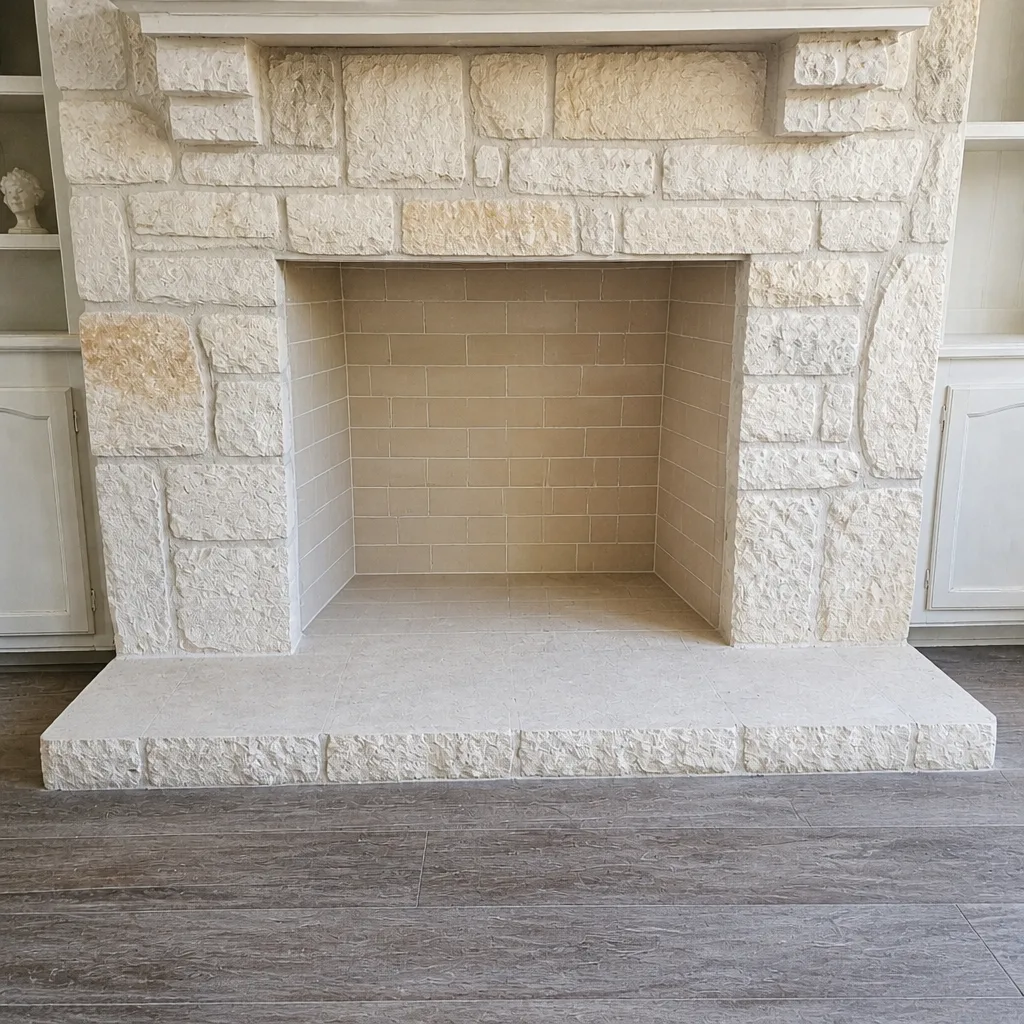
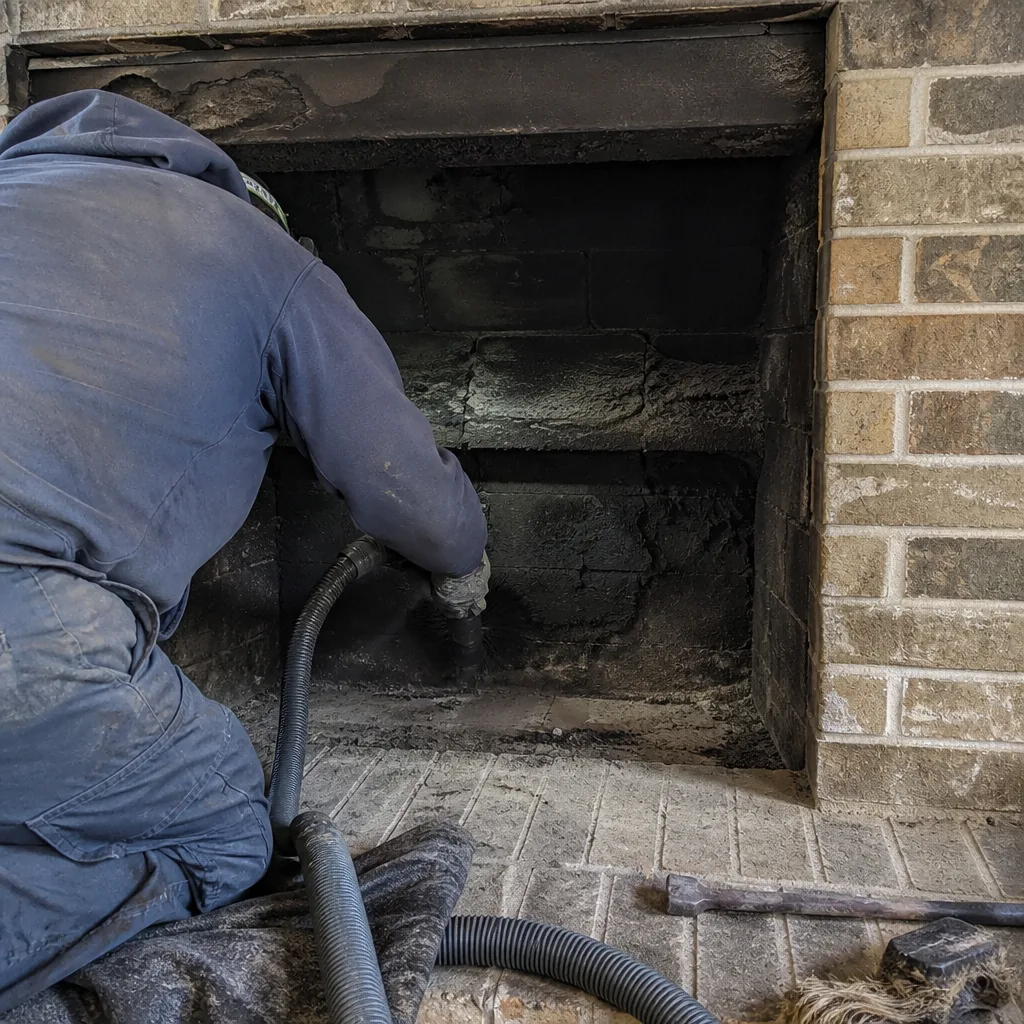
See the difference
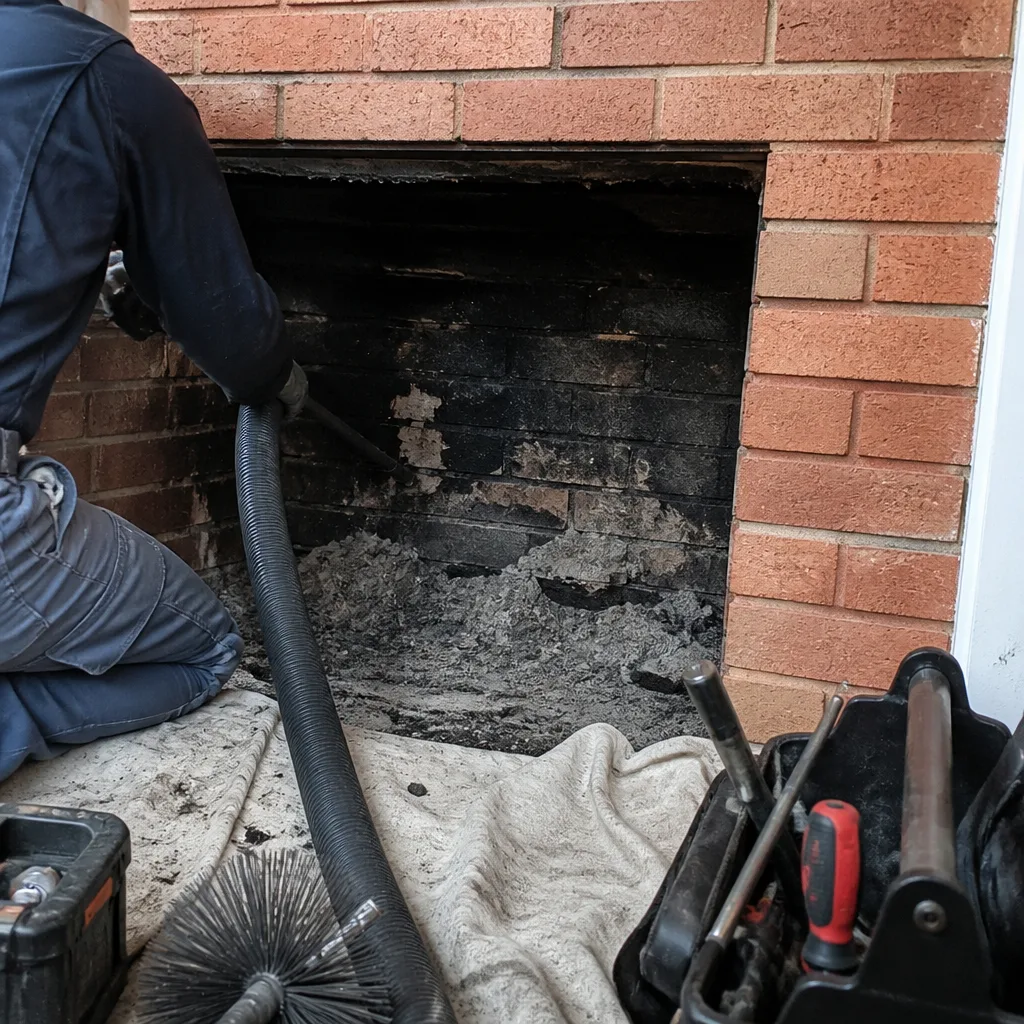 Before
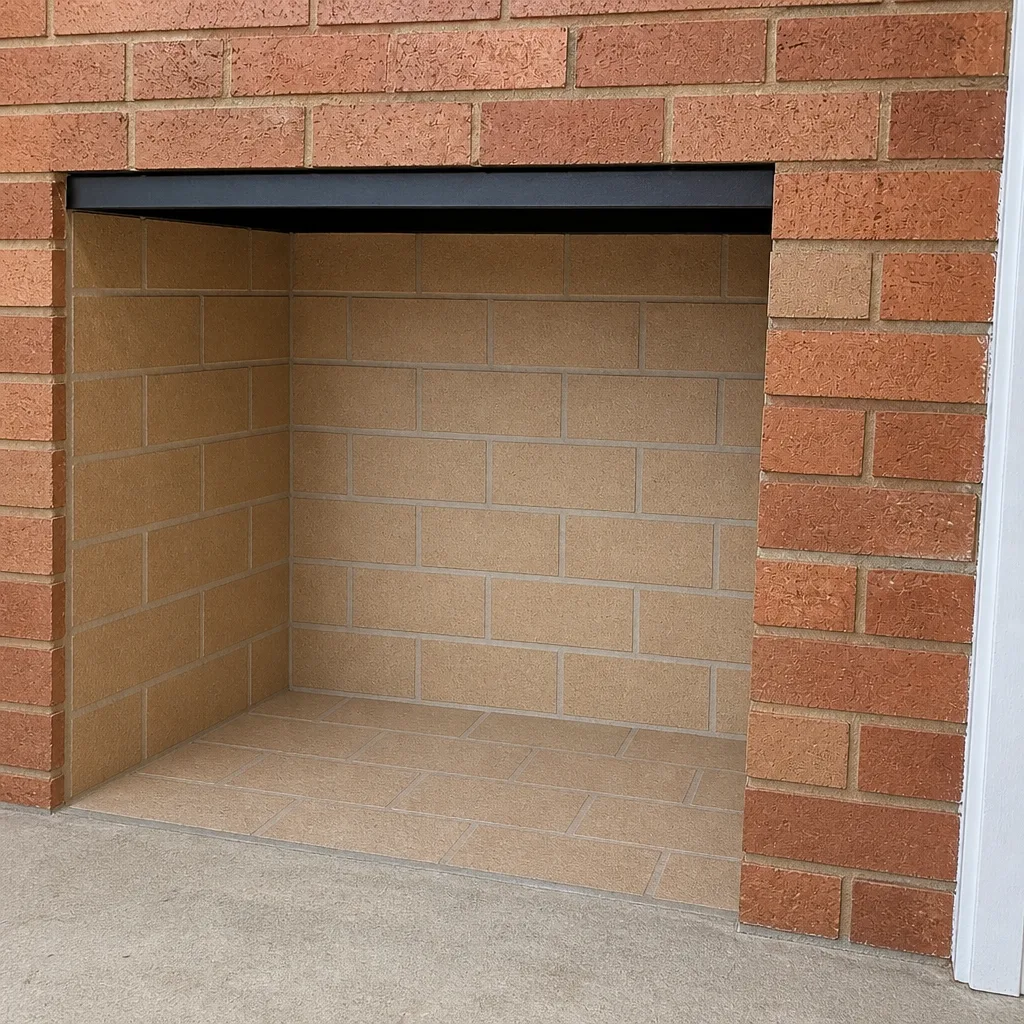 After
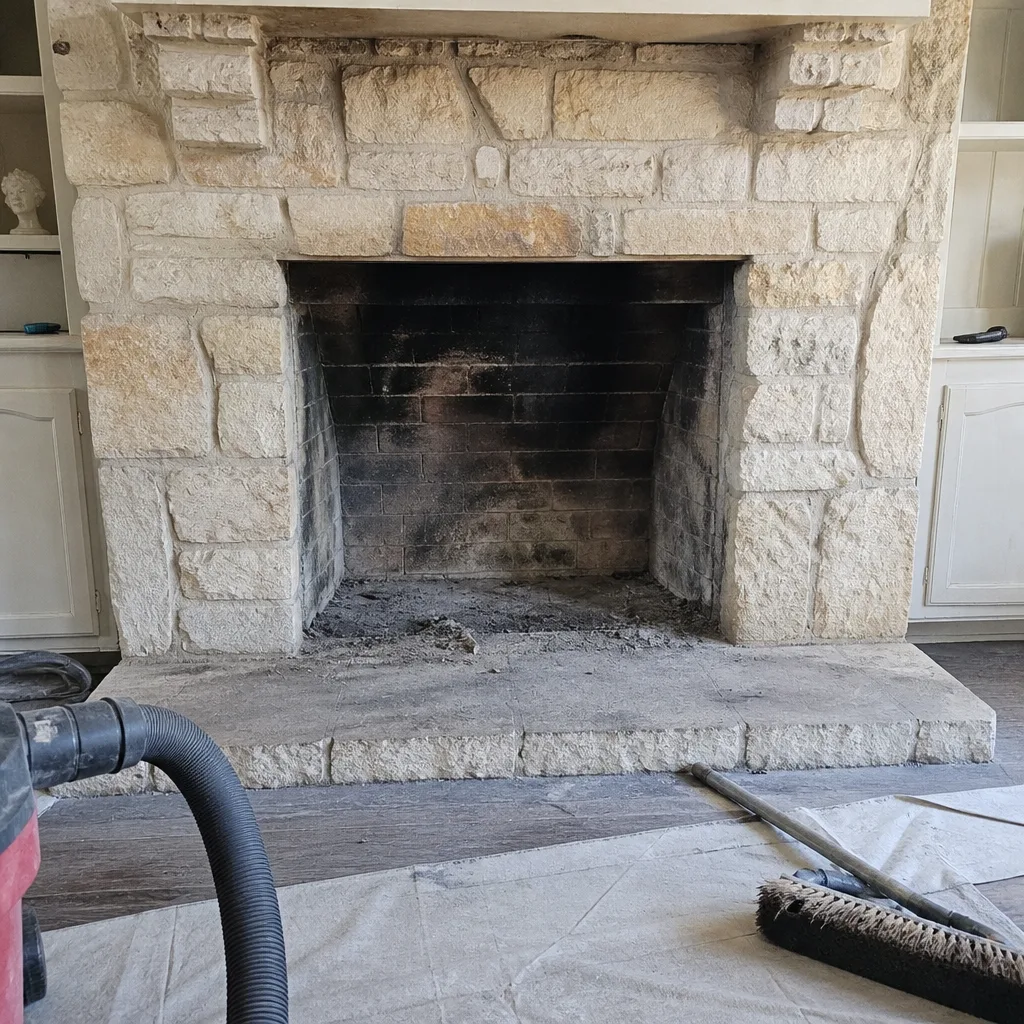 Before
 After
 Before
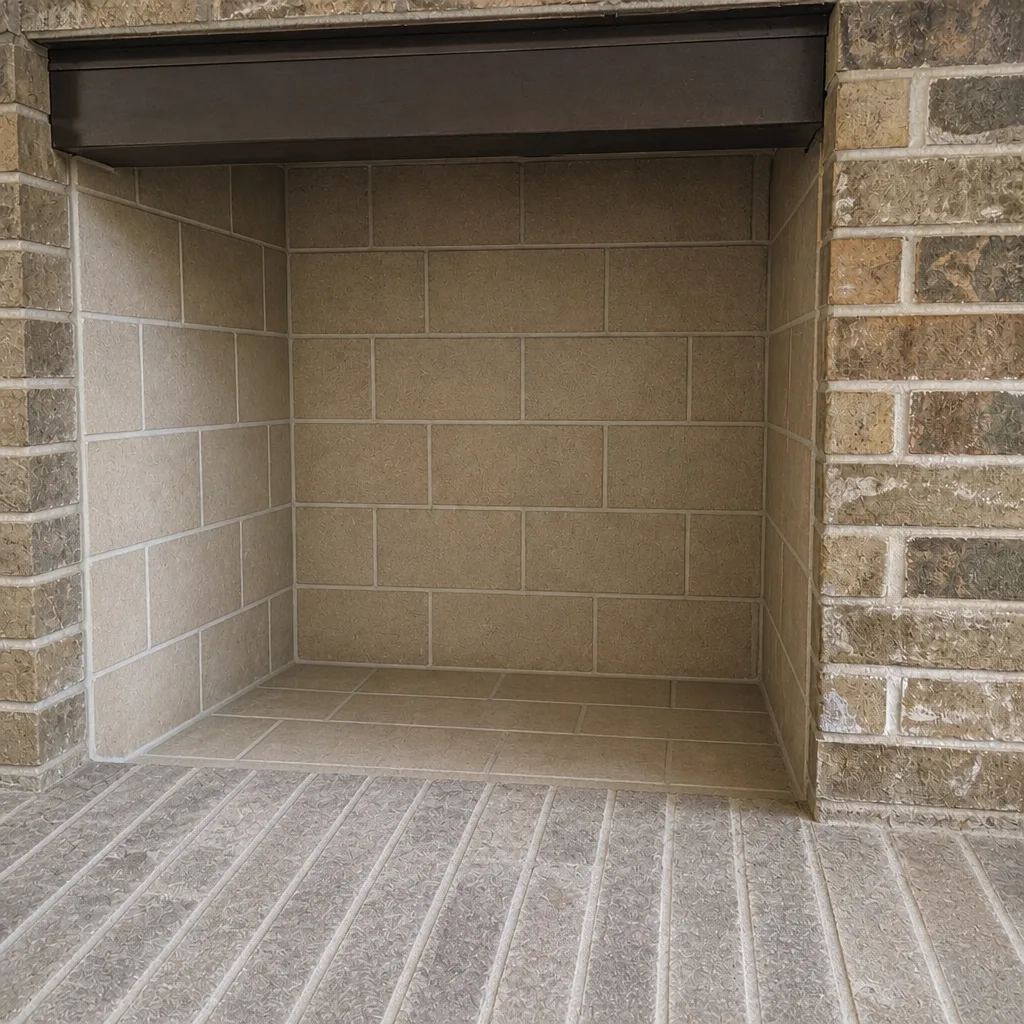 After
When to Call a Professional
Call a professional chimney sweep in San Angelo whenever you can’t verify the condition of the flue from the ground. That means: any smoke backup you can’t explain by weather, any sign of water intrusion on the ceiling or firebox, any white efflorescence or dark staining on the exterior, any spalling masonry at the top of the chimney, any sudden draft change after months of good draft, or any cap that’s lifted, torn, or missing. Call us before lighting a fire in the fireplace if you’ve had a long gap between seasons and haven’t had the flue checked. And call if the dryer is suddenly taking two cycles to dry a load, because that vent is a fire risk on the same visit.
Chimney Sweep San Angelo offers free estimates in San Angelo. Call (833) 946-3155. We answer 24/7. Fast dispatch from 7am to 7pm, Sunday through Friday. Our technicians have up to 11 years of experience. We’ll bring a camera, show you the footage, and tell you plainly if the problem can wait or if it can’t. A scheduled chimney sweep with a photo report is the cleanest way to know what you’re actually dealing with.
Frequently Asked Questions
Smoke backing into the room is most often a draft problem, not a blockage, especially when it happens on windy days or on light-up before the flue warms. In San Angelo, wind pressure across the Concho River corridor and tight modern homes both cause backdrafting on chimneys that are otherwise clean. If the smoke shows up regardless of weather and gets worse over the season, that points to a buildup or a partial blockage, which is a different fix. A camera inspection distinguishes the two in minutes. Call (833) 946-3155 for a free estimate.
A cleaning and a liner replacement solve completely different problems, and you can only know which one applies by looking inside the flue with a camera. A cleaning removes creosote from an intact flue. A liner replacement is necessary when a flue tile has cracked through or when the chimney was built without a proper liner and now serves a wood stove or insert. If a sweep quotes you a full relining without showing camera footage of a breach, ask to see the footage. Our inspection comes with a photo report so the homeowner can see the condition themselves. Call (833) 946-3155 for a free estimate.
HeatShield resurfacing restores eroded mortar joints and seals small cracks in a flue whose tiles are intact and correctly sized; DuraFlex relining is necessary when tiles are broken, shifted, or missing, or when the flue was built to a standard that no longer fits the appliance. The dividing line is whether the flue can still contain the fire, and only a camera inspection answers that question. Call (833) 946-3155 for a free estimate.
Most wood-burning chimneys should be inspected once a year and swept every one to two seasons, but the amount you burn and the quality of your firewood shorten or extend that interval. Gas-fired inserts don’t build creosote the same way, so the sweep interval is longer while the yearly inspection still applies. A chimney with a weak draft builds creosote faster and unevenly, so the inspection is where the actual interval gets set. Call (833) 946-3155 for a free estimate.
Nothing dramatic on the first skipped year, and that’s precisely why it’s easy to skip. What changes slowly is creosote buildup inside the flue, softened mortar joints that stop holding the tiles tight, and water working its way through a small crown crack. Each of those makes the eventual repair larger than it needed to be. The risk that matters is chimney fire in a breached flue, where the breach opens a path from the fire to the framing of the house. A sweep and inspection that shows the flue is clean and intact is the only way to rule that out. Call (833) 946-3155 for a free estimate.
You can safely check the firebox, the damper, the exterior masonry, and the cap with binoculars from the ground, and that information is genuinely useful when you call. Anything above your line of sight, and anything behind the damper, needs a camera inspection from a trained sweep. Do not put a phone or a borescope down the flue yourself. A scheduled visit for Chimney Sweep San Angelo covers the camera inspection, a photo report, and the sweep if warranted. Call (833) 946-3155 for a free estimate.
The Bottom Line
Most chimney trouble in San Angelo starts with a misdiagnosis, not a mystery. If smoke backs into the room after a cleaning, the flue wasn’t the problem. If a small crack in the crown is letting water in, the damage is growing every season you wait. Read the symptom, identify the cause, and match the repair to the actual condition. Backdrafting needs a draft fix, not a brush. A soft mortar joint needs HeatShield, a broken tile needs DuraFlex. A failed cap needs the right cap, and a clogged dryer vent needs to be on the same visit. A camera inspection with a photo report is how you avoid paying twice for the same problem: once for the wrong repair, and once for the repair you actually needed.
Contact
If you’ve read this guide and you still aren’t sure which category your chimney falls into, that’s normal. Call us. Chimney Sweep San Angelo is a full-service chimney and dryer-vent specialist that works with professional-grade products, not hardware-store substitutes: DuraFlex liner systems, HeatShield resurfacing compound, and Famco, Olympia Chimney, Gelco, and Copperfield caps and covers. We come prepared to clean it and fix it if needed, and we’ll show you the camera footage so you can see what we see before agreeing to anything. Call (833) 946-3155 for a free estimate. We answer 24/7, with fast dispatch from 7am to 7pm, Sunday through Friday. One call covers your chimney and your dryer vent.
Written by the team at Chimney Sweep San Angelo.